 EN
EN  ES
ES  IT
IT  FR
FR 
Struggling to land your dream role? Uncover the step-by-step strategies and AI hacks to streamline your job search. Learn how a 30-day action plan, focused weekly systems, hidden market networking, and burnout-proof routines create unstoppable results for modern job seekers.
Key Takeaways
- A 30-day job search plan builds structure, sets manageable goals, and significantly boosts response rates by fueling discipline and momentum.
- The Weekly Focus System breaks big goals into clear, achievable stages—foundation, networking, targeted applications, and interview mastery—so you move forward with confidence.
- 80% of great jobs are found in the hidden market through authentic networking, not endless online applications—quality connections beat quantity every time.
- AI tools like JobWinner.ai instantly customize resumes and cover letters, saving hours and highlighting your strengths, but your unique voice makes every application memorable.
- Burnout-proof your job search by using smart routines, brief focused sprints, and a data-driven tracker—identify what’s working, adapt, and celebrate small wins for lasting motivation.
How a 30-Day Job Search Plan Boosts Success
Treating your job search like a 30-day project brings structure and urgency to what can otherwise feel overwhelming. Rather than drifting through an endless process, you set clear start and finish lines—making it easier to stay focused and motivated.
A recent survey of hiring managers found that candidates who use structured routines are 40% more likely to get responses within the first month of searching.
- Creates manageable daily and weekly goals.
- Encourages regular reflection and course correction.
- Helps you spot patterns in what’s working (and what isn’t) quickly.
With AI-powered tools now helping candidates generate targeted resumes and cover letters in a fraction of the time, your main competitive edge becomes discipline and smart planning.
Consider this real-world scenario:
Jenna, a marketing professional, dedicated 30 days to a targeted job search using a structured plan. By setting aside time daily for outreach, tracking her applications, and using AI tools to tailor her materials, she secured three interviews—and a job offer—within a month.
The bottom line: A 30-day plan is not just about speed—it’s about building momentum and habits that pay off, even after you land the job. This structured approach gives you a repeatable formula for future career moves, making every search smarter and more strategic.
As you move forward, think of your 30-day plan as a campaign: focused, dynamic, and designed for real results.
Master Your Job Search with a Weekly Focus System
A structured job search can be the difference between frustration and momentum. The Weekly Focus System breaks the process into manageable stages, each with a distinct goal that keeps you moving forward. Instead of juggling every task at once, you’ll dedicate each week to a specific priority:
- Week 1: Build your foundation – optimize your resume, LinkedIn profile, and clarify your job target.
- Week 2: Expand your reach – start networking and make warm connections.
- Week 3: Apply smarter – tailor every application, track responses, and focus on quality over quantity.
- Week 4: Ace your interviews – prepare, practice, and gather feedback to improve.
This method eliminates guesswork and keeps energy focused where it counts most.
| Week | Main Focus | Key Actions |
|---|---|---|
| 1 | Clarity & Optimization | Resume, LinkedIn, Job Target |
| 2 | Outreach & Networking | Coffee Chats, Connection Requests |
| 3 | Targeted Applications | Tailor Materials, Track Responses |
| 4 | Interview & Feedback | Prep, Interview, Analyze Results |
Notice how each stage builds on the last, setting you up for steady progress.
What makes this system truly effective is its use of daily micro-actions. For example, you might use JobWinner.ai to instantly tailor your resume to a job description, schedule a 15-minute networking call, or record your daily progress in a tracker. These bite-sized tasks prevent overwhelm, turning the daunting job search into a series of achievable steps.
A key insight: Flexibility is built into the system. If you need more time for networking or an extra week for applications, you can adapt the schedule to fit your needs—without losing momentum. This adaptable structure ensures every action drives you closer to your next opportunity, rather than scattering your efforts.
In summary, the Weekly Focus System helps job seekers stay organized, confident, and proactive throughout the entire journey. Next up, let’s look at how you can customize this system to your unique goals.
Unlocking Opportunities in the Hidden Job Market
Many job seekers mistakenly focus all their energy on public job postings, unaware that a significant share of hiring happens out of sight. In fact, research indicates that 70–80% of jobs are secured via the hidden job market, typically through networking rather than direct applications. This means building authentic relationships can be far more effective than submitting dozens of resumes.
| Job Search Method | % of Jobs Filled | Typical Example |
|---|---|---|
| Job Boards/Public Listings | 20–30% | Indeed, Glassdoor |
| Hidden Job Market/Networking | 70–80% | Referral, mutual connection |
This table reveals why diversifying your approach beyond job boards is crucial for long-term success. By prioritizing networking, you dramatically boost your access to roles that aren’t advertised publicly.
To make the most of this hidden market, focus on authentic networking rather than mass outreach. Instead of sending generic messages, engage in meaningful ways:
- Attend targeted events such as curated industry meetups or Lunchclub sessions.
- Participate in niche online communities—think LinkedIn groups or Slack channels related to your field.
- Reconnect with alumni, shared-interest contacts, or mutual connections for a quick coffee chat or casual conversation.
Genuine engagement—like thoughtful LinkedIn comments or sharing industry insights—often leaves a deeper impression than simply asking for a job.
These strategies not only expand your access to the hidden job market but also help you build relationships that yield long-term career dividends. The main point: Focusing your networking on quality and relevance makes you far more memorable—and puts you on the radar for unadvertised opportunities. Transitioning next, we’ll explore practical ways to personalize your outreach and make every connection count.
Blending AI Efficiency With Your Unique Voice in Job Searches
AI-powered tools like JobWinner.ai can dramatically streamline your job search by generating custom resumes, targeted cover letters, and personalized interview prep in seconds. These capabilities not only save you hours but also remove much of the guesswork, allowing you to focus your energy where it matters most.
Key ways AI accelerates job search preparation:
- Instantly crafts resumes tailored to each job description
- Writes cover letters that highlight your top qualifications
- Generates interview questions based on the role
While these features boost efficiency, they work best when you guide them. For instance, after AI drafts a follow-up email, adding your own anecdote or insight makes your communication stand out and feel authentic.
It’s important to remember that AI’s role is to enhance—not replace—your personal touch. Consider this real-life scenario: after AI helps generate an application summary, a job seeker records a short, genuine voice note to the recruiter, making a memorable impression. Another effective approach is to use AI to suggest talking points, then weave in stories from your real experiences to build trust.
“The best candidates combine AI speed with authentic, human interaction. Set it, steer it, and show up.”
The main insight: Use AI to do the heavy lifting, but always add your personal flair. This blend of smart automation and genuine connection is what leads to the strongest job outcomes.
Ready to apply this strategy? Up next, learn how to make your application even more memorable by blending technology and authenticity. For practical tips, check out our guide on how to tailor your resume to the job description.
How to Make Your Job Search Burnout-Proof and Effective
Job hunting can be overwhelming, but a sustainable approach keeps energy levels high and motivation steady. Instead of spreading yourself thin, try scheduling focused time blocks for your job search activities. For instance, using the Pomodoro Technique—working in four 25-minute bursts with breaks—helps maintain focus without exhausting yourself.
To avoid fatigue, incorporate buffer days when you do no applications at all, giving your mind space to recharge. This balance prevents burnout and keeps you engaged over the long haul.
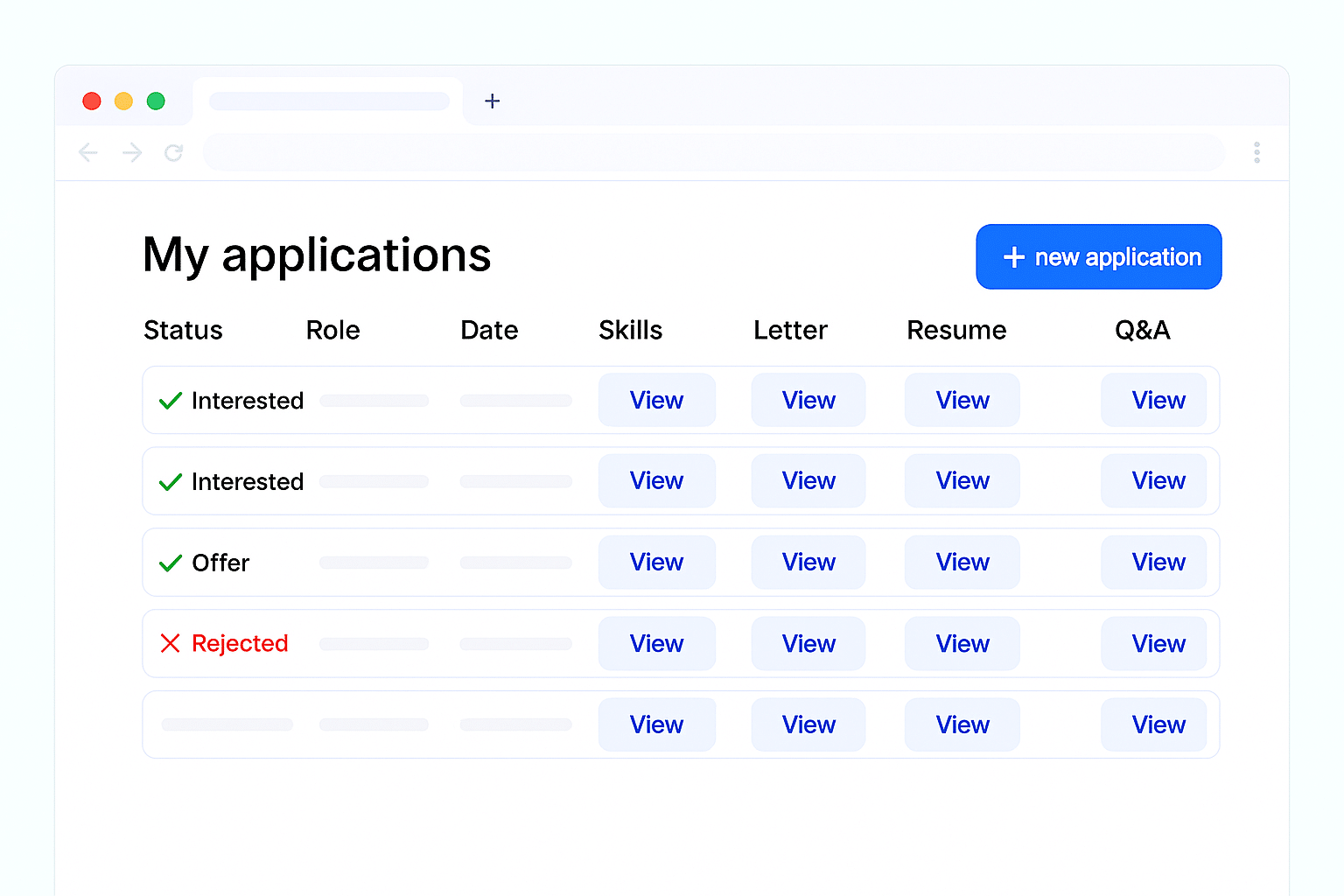
Tracking your job search isn’t just about staying organized—it’s about learning what works. Use a simple tracker not only to log activity but to identify patterns: Are certain resume tweaks getting more responses? Are specific networking messages leading to interviews?
| Action | Result | Adjustment Needed? |
|---|---|---|
| Applications Sent | Few replies | Revise resume |
| Coffee Chats | Two referrals received | Schedule more |
| LinkedIn Messages | Many ignored | Tweak approach |
Regularly reviewing this data lets you make small course corrections—maybe shifting your target roles or refining outreach. Recording three small wins daily, such as positive feedback or a new connection, helps build positive momentum. The big idea: Creating a sustainable routine gives you control and confidence, making your job hunt less stressful and more productive. If you want a smart and simple way to keep track, try JobWinner.ai’s job tracker.
Conclusion
The modern job search is a marathon, not a sprint—but with a 30-day plan, a weekly focus system, authentic networking, strategic AI tools, and burnout-proof routines, you can dramatically boost your odds of landing your dream role. The key is to combine structure with adaptability, leverage technology thoughtfully, and never lose sight of your authentic self.
Ready to take the next step? Explore our guides on writing resume achievements or preparing for interviews with AI to level up your job search even further. Your next opportunity is closer than you think—start your 30-day campaign today!