 EN
EN  ES
ES  IT
IT  FR
FR 
Entering the job market as a student can feel like trying to solve a puzzle with missing pieces. You've got the academic smarts and heaps of ambition, but how do you translate that into a resume that actually wows a hiring manager? The secret isn't just listing your classes or GPA; it's about strategically showing off the skills employers are really looking for. It's easy to overlook the powerful, transferable abilities you've picked up from class projects, part-time jobs, volunteer work, and even your hobbies.
This guide is here to help you connect those dots. We'll break down the top 10 most impactful resume skills for students, going beyond generic buzzwords to give you real, practical advice. You’ll learn how to spot these skills in your own experiences and, more importantly, how to talk about them on your resume. We've packed this with specific examples and tips to help you turn your student background into a compelling story of professional potential. Think of this as your roadmap for building a resume that doesn't just list what you've learned, but shows what you can do, positioning you as the capable, ready-to-hire candidate you are.
1. Technical Proficiency & Programming Skills
In today’s digital-first world, technical know-how is easily one of the most critical resume skills for students. This covers everything from the software you can use to the programming languages you speak and the digital tools you've mastered for your field. For employers, these skills aren't just a nice-to-have; they're often a must-have. Your resume will likely be scanned by an Applicant Tracking System (ATS) specifically looking for these keywords, so you need to get them in there.

Showing off your tech skills proves you can hit the ground running with minimal hand-holding. For anyone interested in a career that blends tech knowledge with great communication, learning What Is Technical Writing can open up some really interesting doors.
How to Showcase Your Technical Skills
Listing your technical abilities effectively is all about being precise and providing proof. Vague claims just don't cut it; specificity is what gets you noticed.
- Be Specific: Don't just write "Python." Get detailed! List the frameworks and libraries you know, like "Python (Django, Flask, Pandas)."
- Show, Don't Just Tell: Back up what you say. A link to your GitHub profile, a personal portfolio website, or specific class projects offers solid proof of what you can do.
Example: A finance student could show off their SQL skills by linking to a project where they analyzed market data.
- Tailor to the Job: Read the job description carefully and prioritize the skills they mention. If a company wants Java and Spring Boot, make sure those are front and center in your skills section. This simple tweak can dramatically boost your chances of getting past the initial screening.
2. Communication & Writing Skills
Being able to get your ideas across clearly, whether you're writing or speaking, is one of the most universally sought-after resume skills for students. This skill set includes everything from writing professional emails and reports to giving a killer presentation and contributing to productive team chats. Every employer wants someone who can explain complex information simply and effectively—it shows you’re professional, a clear thinker, and can work well with others.

Great communication skills can really make you stand out. An engineering student who can explain a technical project to a non-technical manager is a dream candidate for product management. Similarly, a liberal arts major with fantastic writing skills is perfect for a marketing role. Your resume is your first chance to show this off; understanding the key components of a resume helps you present your qualifications clearly from the get-go.
How to Showcase Your Communication Skills
Demonstrating soft skills like communication means you need to provide real evidence in your application.
- Use Action Verbs: Kick off your resume bullet points with strong verbs that scream communication. Think "Presented," "Negotiated," "Authored," or "Pitched."
Example: "Presented a semester-long research project on market trends to a panel of three professors."
- Highlight Specific Outcomes: Quantify the results of your communication. Instead of "wrote a proposal," try something like, "Authored a 10-page grant proposal that secured $1,500 in funding for a student organization."
- Leverage Your Cover Letter: Your cover letter is the perfect place to let your writing style shine and make a persuasive case for yourself. It’s your chance to tell a story that your resume’s bullet points can’t, showing off your communication skills in action.
3. Teamwork & Collaboration
In just about any job you can think of, working well with others is a must. Teamwork and collaboration are essential resume skills for students because modern work is all about partnership. Employers want to see that you can slide right into a team, add to a positive group vibe, and work together to hit your goals. Your time as a student is packed with chances to build and show off this skill, from group projects to clubs and sports.

Highlighting your collaborative spirit shows recruiters you can handle different personalities, manage disagreements constructively, and help create a productive work environment. For students aiming for leadership roles down the line, knowing how to build that kind of atmosphere is a huge plus.
How to Showcase Your Teamwork Skills
You need to do more than just write "team player" on your resume. Give them solid evidence of how you've contributed to a team and the great things you accomplished together.
- Detail Your Role and Contribution: Don't just mention a group project; explain your specific part.
Example: An engineering student could write: "Collaborated in a 4-person team to design a functional prototype, responsible for circuit design and software integration."
- Quantify Collective Achievements: Use numbers to show the impact of your team's work.
Example: A business student might state, "Worked with a 5-member team in a case competition to develop a marketing strategy that judges scored in the top 10% for creativity and feasibility."
- Prepare STAR Method Stories: For interviews, have examples ready using the Situation, Task, Action, Result (STAR) method. This framework helps you tell a clear, compelling story about how you navigated real-world team dynamics.
| STAR Method | Description |
|---|---|
| Situation | Describe the context. What was the challenge or team setting? |
| Task | What was your specific goal or responsibility? |
| Action | What collaborative steps did you take to achieve the goal? |
| Result | What was the positive outcome of your team's effort? |
4. Leadership & Project Management
The ability to guide, organize, and inspire a team toward a common goal is one of the most highly valued resume skills for students. Leadership and project management show that you can take ownership, make decisions, and drive results—qualities that employers are always looking for. Even if you haven't been a "manager," you can showcase these skills through class projects, clubs, or volunteer work.
Showing your leadership potential proves you're a proactive candidate who can think strategically, not just follow a to-do list. It tells recruiters you have what it takes to grow with the company and tackle bigger challenges, making you a top contender for competitive internships and entry-level jobs.
How to Showcase Your Leadership & Project Management Skills
Just saying you have "leadership skills" won't cut it. You have to back it up with concrete examples of how you've successfully managed people, projects, and resources.
- Quantify Your Impact: Use numbers to show the scale and success of your leadership.
Example: Instead of "Led a club," say, "Directed a 15-member volunteer club, increasing membership by 200% and raising $5,000 for charity events."
- Use Action-Oriented Language: Start your bullet points with powerful verbs that convey leadership. Words like spearheaded, coordinated, oversaw, delegated, and orchestrated are much more impressive.
- Highlight Both Formal and Informal Roles: Don't just list official titles like "Class President" or "Team Captain." Think about the times you took charge in a group project, mentored a new member, or organized a study group that helped everyone succeed. These examples are just as powerful.
5. Analytical & Problem-Solving Skills
Employers everywhere are on the hunt for people who can think critically and solve tough problems. As a student, showing off your analytical and problem-solving skills proves you can gather information, break down data, pinpoint the real issues, and come up with smart solutions. These are foundational resume skills for students that show you can add real strategic value.
Analytical skills prove you're more than just a doer; you're a thinker who can handle tricky situations and contribute to the company's bigger goals. Knowing how to build critical thinking skills is essential for any analytical role, whether you're an engineering student debugging a design or a business major analyzing a case study.
How to Showcase Your Analytical & Problem-Solving Skills
You can't just list "problem-solver" and call it a day. You have to provide real evidence of how you've used these skills.
- Quantify Your Impact: Use the STAR (Situation, Task, Action, Result) method in your resume bullet points to frame your accomplishments.
Example: Instead of "Analyzed sales data," try "Analyzed sales data using advanced Excel functions, identifying a 15% dip in Q3 sales and recommending a revised marketing strategy that recovered 10% of the loss."
- Highlight Specific Tools: Mention the software you used to do your analysis.
Example: "Conducted statistical analysis using R to interpret survey results for a market research project." This gives recruiters a clear idea of your technical chops.
- Show Your Process: In interviews or your portfolio, don't just jump to the answer. Walk them through your thought process: how you defined the problem, gathered data, weighed different solutions, and made your final call. This reveals the true depth of your analytical thinking.
6. Adaptability & Learning Agility
In a professional world that changes at lightning speed, adaptability is one of the most valuable resume skills for students. It's your ability to quickly pick up new things, adjust to changing situations, and thrive even when you're out of your comfort zone. Employers love candidates with a growth mindset because it means they can handle unexpected challenges and keep adding value.
Your ability to learn on the fly is a huge asset, especially when you're just starting out. It shows you're resilient, resourceful, and ready to contribute from day one, no matter how steep the learning curve. Mastering this is key to a dynamic career, and framing these abilities as transferable skills can be your secret weapon.
How to Showcase Your Adaptability
Demonstrating adaptability is all about showing, not just telling. Use concrete examples from your school and extracurricular life to prove you're a quick learner.
- Highlight Quick Learning: Talk about times you had to pick up a new skill fast for a project or role.
Example: A business student could say, "Self-taught Python and SQL mid-semester to conduct advanced data analysis for a marketing case competition, resulting in a first-place finish."
- Showcase Pivots and Adjustments: Describe how you successfully handled unexpected changes. Did a group project's goals change at the last minute? Explain how you reorganized the team's plan and adapted your strategy to hit the new deadline.
- Emphasize Continuous Growth: List relevant certifications, workshops, or online courses you've taken outside of your required classes. This proves you're proactive about your own development and eager to learn new things.
7. Digital Literacy & Social Media Savviness
In a time when a company's online reputation is everything, digital literacy has become one of the most sought-after resume skills for students. This is more than just knowing how to post on Instagram; it's about understanding digital marketing, content creation, analytics, and online collaboration tools. For employers, a candidate who gets the digital world can immediately help with marketing, communications, and customer engagement.
Showing off your digital and social media skills proves you're a modern communicator who knows how to build and engage an online community. Whether you're a marketing major who grew a club's Instagram or a business student who's a pro at networking on LinkedIn, these skills are tangible proof of your value.
How to Showcase Your Digital and Social Media Skills
To really show off your digital know-how, you need concrete examples and real numbers. Vague claims like "good with social media" won't impress anyone; you need to show your impact.
- Quantify Your Achievements: Instead of just listing platforms, include metrics.
Example: Write "Managed Instagram for a university club, increasing follower count by 40% and engagement by 25% over six months."
- Link to Your Work: Provide direct links to a professional online portfolio, a polished LinkedIn profile, or specific content you've created. A communications student could link to a successful TikTok video series they made for a class project.
- Highlight Relevant Tools: Mention specific software and platforms you've mastered. This could include:
- Social Media Schedulers: Hootsuite, Buffer
- Analytics Tools: Google Analytics, platform-specific insights
- Content Creation Apps: Canva, Adobe Creative Cloud
*Tailor this list to match the tools mentioned in the job description.
8. Time Management & Organization
For students juggling classes, internships, and a social life, time management is one of the most practical and impressive resume skills for students. It shows you can prioritize tasks, hit deadlines, and handle multiple responsibilities without breaking a sweat. Employers love candidates who can organize their own work and deliver results without needing constant supervision, proving they're reliable and productive.

Showcasing this skill proves you can easily transition into a professional setting where managing deadlines and projects is part of the daily grind. It signals to recruiters that you have the self-discipline to be a valuable team member from day one.
How to Showcase Your Time Management Skills
To communicate your organizational skills, you need real-world examples that back up your claims. Just saying you're "organized" isn't enough; you need to provide proof.
- Quantify Your Experience: Use numbers to highlight what you've handled.
Example: Instead of saying you "handled multiple projects," be specific: "Successfully managed 5 concurrent academic projects, delivering all on or before deadline while maintaining a 3.8 GPA."
- Mention Your Tools: Listing the organizational tools you're good with, like Asana, Trello, Notion, or Todoist, shows you're familiar with modern workflows. This small detail can make your resume stand out.
- Use Action-Oriented Language: Frame your experience with strong action verbs.
Example: Describe how you "Coordinated a 15-hour-per-week internship schedule with a full-time course load and weekly volunteer commitments, achieving all academic and professional goals." This is a powerful, real-life example of your skills.
9. Customer Service & Interpersonal Skills
The ability to interact professionally with all kinds of people, understand what they need, and provide great service is key to so many jobs. These interpersonal skills, often called "soft skills," are some of the most valuable resume skills for students because they apply everywhere. Employers want candidates who can build relationships, handle tricky situations with a cool head, and contribute to a positive vibe for both customers and coworkers.
Showing strong customer service skills proves you have empathy, patience, good listening skills, and can resolve conflicts. Whether you've worked in retail, food service, or as a campus tour guide, these experiences show you can represent a brand and manage relationships effectively, making you a great fit for any client-facing role.
How to Showcase Your Customer Service Skills
Your goal is to turn your experiences into tangible business results. Go beyond just listing "customer service" and provide solid evidence of what you can do.
- Quantify Your Achievements: Use numbers to show your impact.
Example: Instead of "helped customers," try "Resolved over 20 customer inquiries daily, achieving a 95% customer satisfaction score based on post-interaction surveys."
- Narrate a Success Story: Use your bullet points to tell a mini-story about a challenge you solved.
Example: "De-escalated a difficult customer complaint regarding a product defect, resulting in a positive review and the customer's continued loyalty."
- Showcase Empathy and Listening: Frame your skills around understanding people's needs.
Example: A tutor could say, "Actively listened to student feedback to tailor tutoring sessions, leading to a 15% average grade improvement for my students." This shows you don't just serve, but you also adapt.
10. Creativity & Innovation
In a world where automation is taking over routine tasks, creativity and innovation are the uniquely human resume skills for students that employers prize. This is your ability to think outside the box, come up with fresh ideas, and find new solutions to old problems. For companies, this means a competitive edge, better processes, and exciting new products.
Showing your creative side proves you can do more than just follow directions; you can add unique value and help the company grow. It shows you're a forward-thinker who can contribute to a company's future, not just its day-to-day operations.
How to Showcase Your Creativity & Innovation
Just listing "Creative Thinker" on your resume is a waste of space. You need to provide real, tangible proof of your innovative skills to make a lasting impression.
- Build a Tangible Portfolio: A portfolio is the ultimate proof of creativity. For a design student, this could be a Behance profile. For a marketing student, it could be a website showcasing mock ad campaigns you developed for a club.
- Highlight Problem-Solving: Frame your creative projects around the problems they solved. An engineering student could describe how an innovative design for a class project improved efficiency by a certain percentage. A business student can detail a startup idea that filled a clear gap in the market.
- Quantify Your Impact: Whenever you can, attach numbers to your creative work. Did a creative social media campaign you ran for a university event boost attendance by 30%? Did a new workflow you suggested for a group project cut down completion time? Numbers provide powerful, undeniable proof of your skill's value. For more ideas, understanding how to write a resume skills section with AI can give you some great guidance.
Top 10 Student Resume Skills Comparison
| Skill | Implementation complexity | Resource requirements | Expected outcomes | Ideal use cases | Key advantages |
|---|---|---|---|---|---|
| Technical Proficiency & Programming Skills | High — requires hands-on practice and continual updating | Computing resources, courses, projects, version control, documentation | Measurable deliverables, higher salary potential, ATS visibility | Software development, data science, engineering roles | Verifiable expertise, direct demand across industries |
| Communication & Writing Skills | Medium — practice, feedback, cultural nuance | Mentors, writing review, presentation practice, editing tools | Clearer proposals, better networking, stronger interviews | Consulting, marketing, management, client-facing roles | Universally valued, improves career progression |
| Teamwork & Collaboration | Medium — interpersonal learning and coordination | Group projects, diverse teams, facilitation practice | Higher team productivity, positive culture, shared results | Cross-functional projects, operations, consulting teams | Enhances outcomes via collective effort and learning |
| Leadership & Project Management | High — requires real responsibility and proven outcomes | Project roles, mentorship, scope to lead, measurable targets | Readiness for promotion, larger scope roles, improved deliveries | Program management, team lead, nonprofit and student orgs | Differentiates candidates, signals advancement potential |
| Analytical & Problem-Solving Skills | Medium–High — needs domain knowledge and tools | Data sets, analytical tools (Excel/SQL/R/Python), case practice | Better decisions, efficiency gains, actionable insights | Analytics, engineering design, consultancy, research | Drives innovation and measurable impact |
| Adaptability & Learning Agility | Low–Medium — mindset plus varied exposure | Diverse assignments, courses, rapid-feedback environments | Faster onboarding, resilience in change, role flexibility | Startups, rotations, career transitions, fast-changing sectors | Critical for long-term career resilience |
| Digital Literacy & Social Media Savviness | Medium — platform-specific, needs frequent updates | Social platforms, analytics tools, content creation resources | Improved online presence, marketing reach, remote work readiness | Marketing, communications, remote and digital-first roles | Contemporary relevance, supports personal branding |
| Time Management & Organization | Low–Medium — habit formation and systems | Planning tools (Asana/Notion/Trello), scheduling practice | Reliable delivery, reduced stress, higher productivity | Any role with deadlines, multitasking, internship+study balance | Demonstrates reliability and efficiency |
| Customer Service & Interpersonal Skills | Medium — emotional labor and situational practice | Roleplay, feedback, real customer interactions | Higher satisfaction, retention, stronger relationships | Retail, client services, account management, tutoring | Builds trust, improves client and team outcomes |
| Creativity & Innovation | Medium–High — practice, portfolio, risk tolerance | Project time, cross-disciplinary exposure, tools for prototyping | Differentiation, new solutions, potential recognition | Design, marketing, product development, startups | Distinguishes candidates, fuels product and service innovation |
Your Next Step: Turn Skills into Interviews
Making the leap from student life to a professional career can feel overwhelming. You have all the right pieces—your classes, group projects, part-time jobs, and volunteer hours. The trick is putting them all together to create a picture that will impress employers. This article has given you a blueprint, breaking down the top ten essential resume skills for students that hiring managers are looking for, from tech skills and project management to creativity and adaptability.
Here's the main takeaway: a skill you list is just a claim, but a skill you can prove is powerful. Your resume isn't just a document; it's your personal marketing tool. Every bullet point should be a mini-story backed by evidence. Instead of saying you have "strong communication skills," describe how you "presented complex research findings to a 50-person class, resulting in a 95% grade and positive peer feedback." This shift from just listing things to telling a story is what makes a resume land you an interview.
From Theory to Application: Your Action Plan
To really make these insights work for you, you need to put them into practice right away. It's not enough to know what skills are important; you have to weave them into your application materials. Here’s a simple, step-by-step plan to get you started:
- Conduct a Personal Skills Audit: Go through the ten skills we covered. Make a two-column list. In the first column, write the skill (e.g., Teamwork & Collaboration). In the second, brainstorm at least two specific examples from your life where you used that skill.
- Quantify Your Achievements: For each example, add a number. How many people were on the team? What was the budget? By what percentage did you increase engagement? Numbers make your impact undeniable.
- Refine Your Master Resume: Update your resume with these new, evidence-based, and quantified bullet points. This will be your go-to document for all future applications.
- Tailor, Tailor, Tailor: Never send out a generic resume. For every job, read the description to figure out the top 3-5 skills they want. Then, customize your resume to highlight the experiences that match those needs, pulling the best examples from your master resume.
By following these steps, you turn the abstract idea of "resume skills for students" into a real asset. You're no longer just a student with a degree; you are a proactive, skilled candidate ready to make a difference from day one. This thoughtful approach shows the very professionalism and attention to detail that employers value, putting you on the fast track to turning your hard-earned skills into exciting interview opportunities.
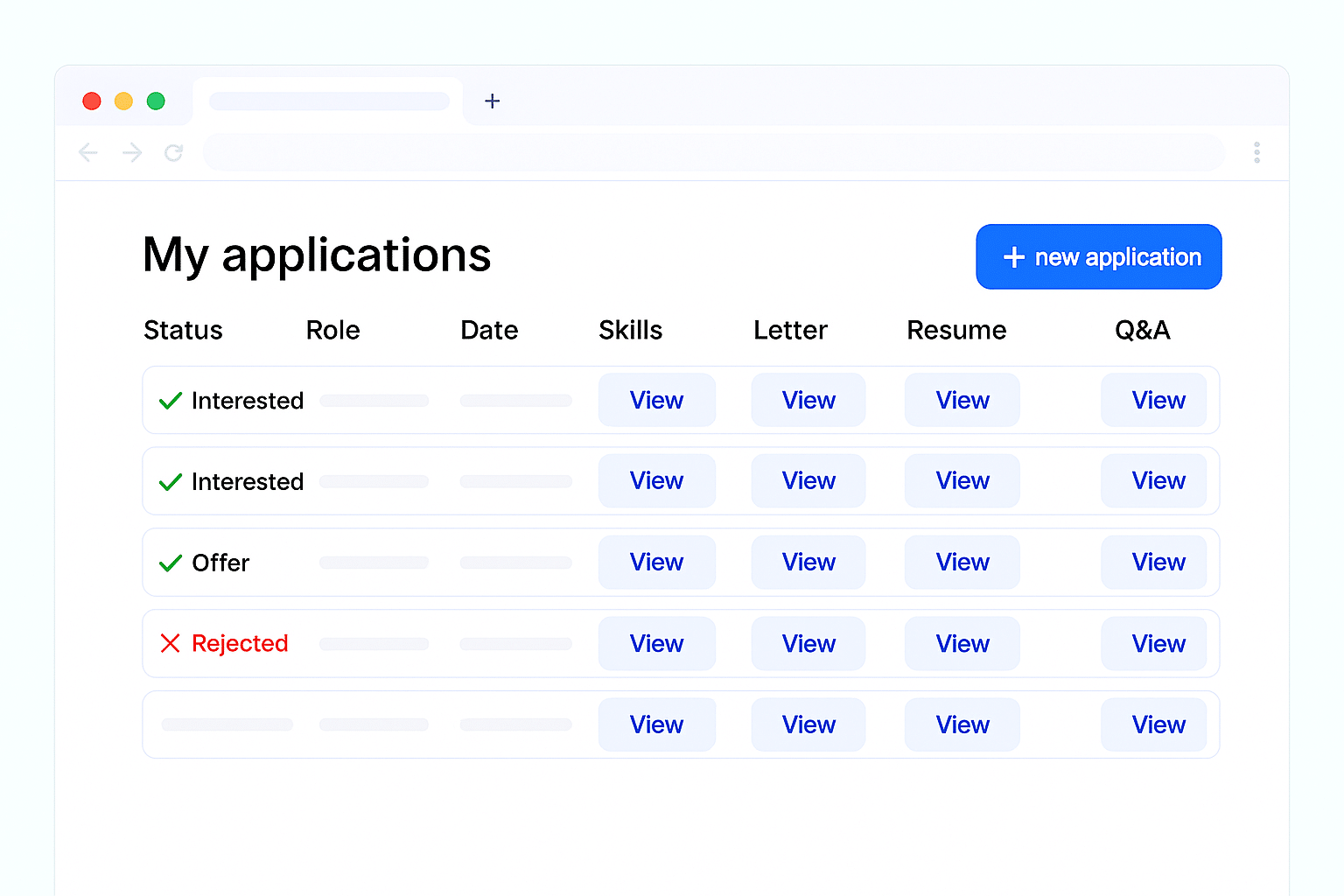
Ready to stop guessing and start impressing? Let JobWinner be your strategic partner in this process, helping you automate the tedious task of tailoring your resume for every application. Its powerful AI analyzes job descriptions to ensure the most impactful resume skills for students are always front and center, getting you past automated filters and into the hands of a hiring manager. Visit JobWinner to build a resume that truly reflects your potential and land the interviews you deserve.