 EN
EN  ES
ES  IT
IT  FR
FR 
Universities are facing immense pressure to show strong graduate employment outcomes, but their traditional career centers are often struggling to deliver. A white label career platform for universities offers a way forward, letting an institution deploy powerful, AI-driven career tools under its own brand. It's how schools can finally close the gap between old-school methods and what today's students actually need to land a great job.
The Widening Gap in University Career Services
Let’s be real. The job market has fundamentally changed, but many university career centers are operating like it's still 2005. They were once the go-to resource, but they were built for a different era. The modern job hunt moves at a blistering pace, driven by AI screening tools, a need for hyper-personalized applications, and intense competition.
A dusty job board and a few resume workshops just don't cut it anymore. Students today grew up online; they expect support that is instant, on-demand, and tailored to them. When they hit a wall with a career office that has limited hours and relies on manual, one-on-one appointments, the experience feels disconnected and unhelpful.
The Limits of Traditional Models
The fundamental problem with the old career center model is that it doesn't scale. No matter how dedicated, a small staff can only realistically help a tiny fraction of the student body. This bottleneck inevitably leads to long waiting lists for appointments and generic advice that misses the mark for a student's specific goals.
This diagram perfectly captures the constraints of the traditional career services model.
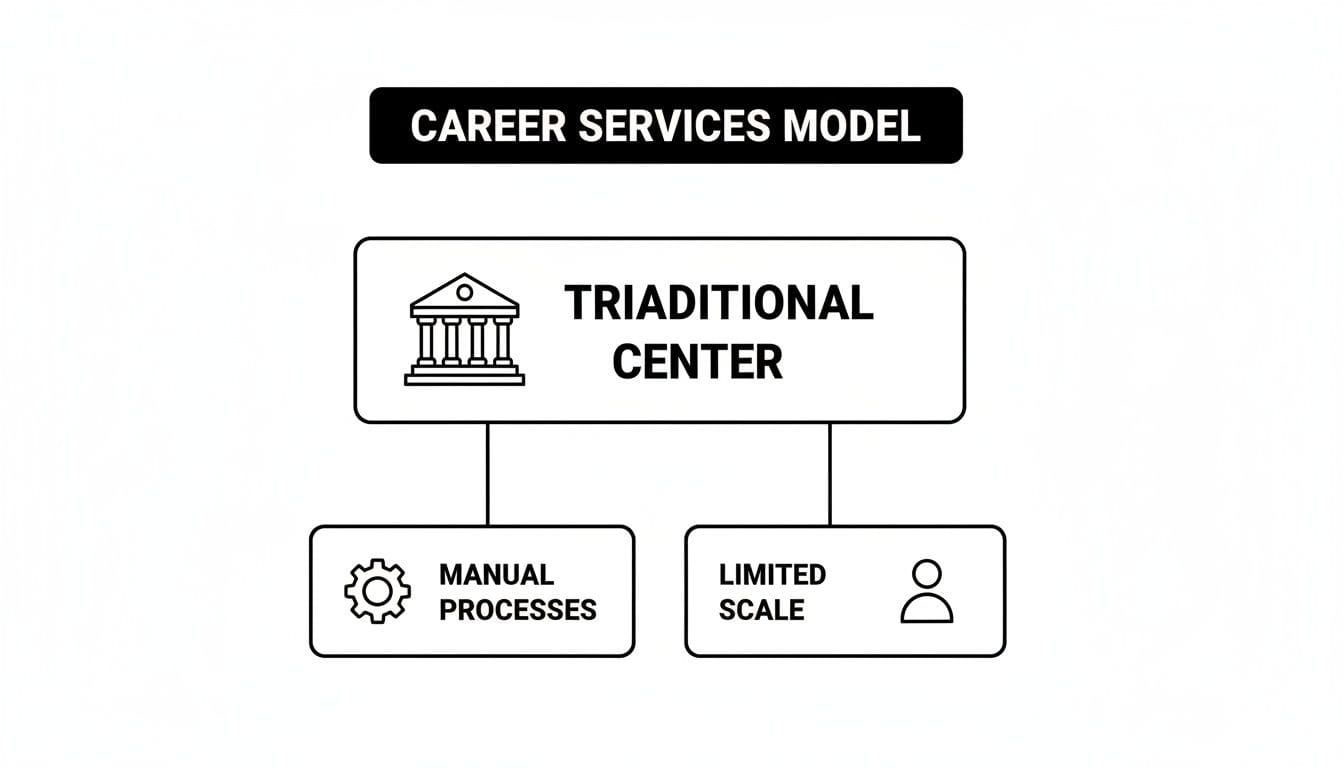
As you can see, the reliance on manual processes and an inability to grow with the student population creates significant roadblocks to providing effective support.
Think about it this way: a university could rent a local high school field for its sports teams, or it could build its own state-of-the-art stadium. The branded stadium delivers a completely different level of experience, pride, and value. A white label career platform for universities is that stadium—it moves career support from a rented field to a world-class, university-branded home.
A university's reputation is increasingly tied to its graduate employment rates. An institution that fails to provide modern career tools risks falling behind in rankings and student recruitment.
Career Services Evolution: Traditional vs White Label Platform
The difference between the old way and the new isn't just a small step—it's a massive leap. One model is held back by manual effort and scarce resources, while the other uses technology to provide robust support to every single student.
To see why a platform approach is becoming non-negotiable, check out this side-by-side comparison.
| Aspect | Traditional Career Center | White Label Career Platform |
|---|---|---|
| Student Experience | Limited hours, manual processes, generic advice | 24/7 access, AI-powered tools, personalized journey |
| University Branding | Uses third-party tools, diluting the brand | Fully integrated with the university's look and feel |
| Scalability | Restricted by staff size and physical resources | Effortlessly serves the entire student population |
| Employer Partnerships | Manual outreach and fragmented communication | Streamlined employer portal for seamless engagement |
| Performance Analytics | Limited to anecdotal data and basic tracking | Rich data on engagement and employment outcomes |
This isn't just a simple upgrade. It's about fundamentally re-equipping students for the hiring landscape they will actually face. By adopting a modern platform, universities can give every student an equitable, powerful, and branded toolkit to build their career. You can discover more about how to bring your institution's approach into the modern era.
What Is a White Label Career Platform
What if you could give your students a world-class career center, packed with the latest tech, without spending years and a fortune building it from scratch? Imagine a company handing you the keys to a fully-equipped digital platform that you could put your university’s name on tomorrow. That’s the simple but powerful idea behind a white label career platform for universities.

At its core, a white label career platform is a ready-made software solution that a university adopts, rebrands, and offers to students as its own. It's essentially a "plug-and-play" system, letting your institution provide powerful career tools without the massive overhead of in-house development.
This model is part of a broader software trend. To get a better sense of the mechanics, it’s worth understanding the bigger picture of What is White Label Software? and how it helps organizations expand their services. For universities, it’s a brilliant way to deliver proven third-party technology while keeping everything under your trusted brand.
From Blank Canvas to Branded Portal
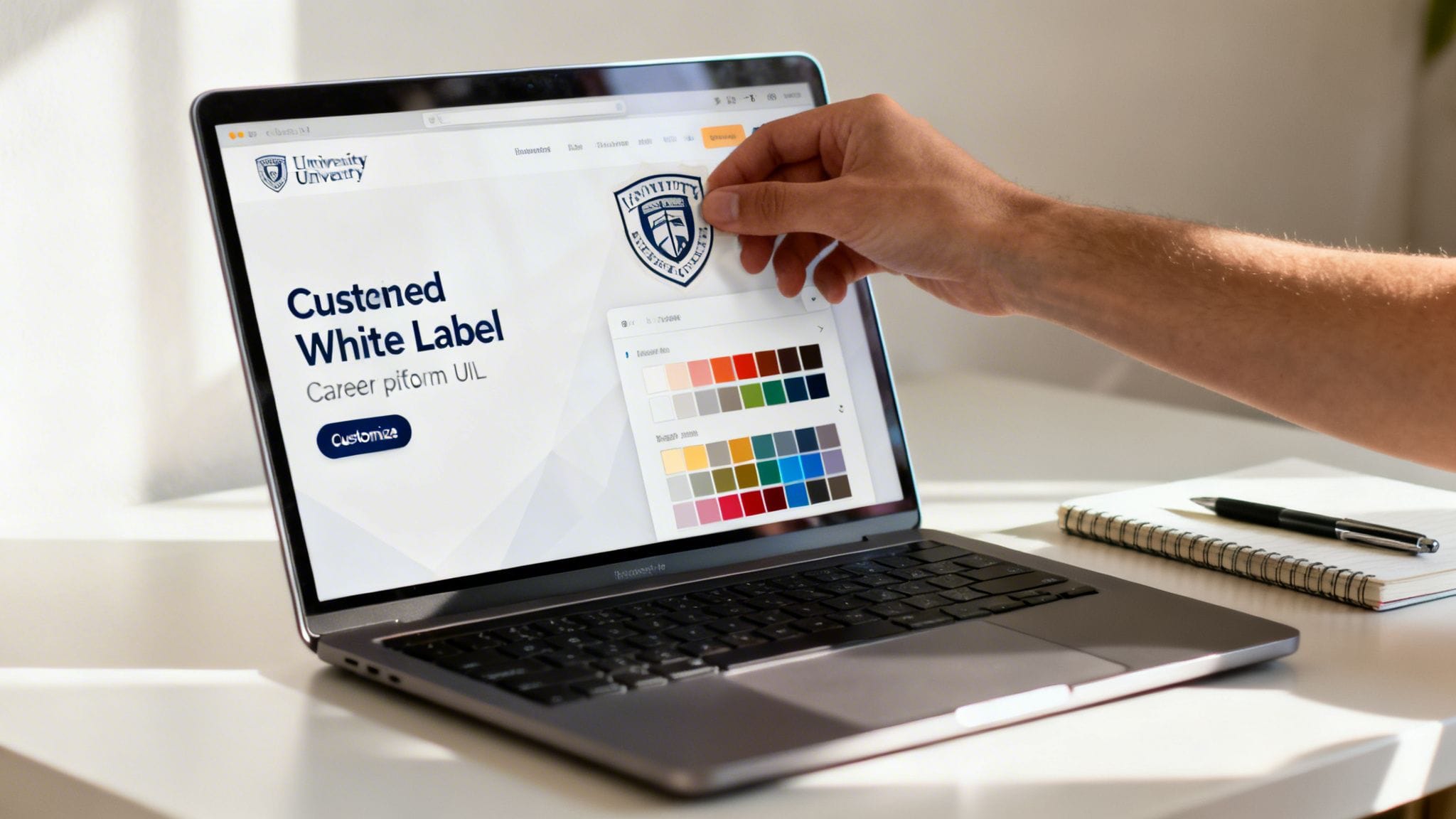
The term "white label" comes from the idea that the product arrives like a blank canvas. The software provider has already done the heavy lifting—building, testing, and refining the technology. Your university’s job is to apply its own brand identity: its logo, colors, and messaging. In no time, the platform looks and feels like a seamless part of your digital campus.
For your students, this makes all the difference. They aren't being shuffled off to some generic third-party site that feels disconnected from their school. Instead, they’re logging into a portal that feels like it was built just for them, by their university. That consistency builds trust and keeps the experience cohesive.
This approach is quickly becoming the new standard. In fact, projections show that 75% of global universities will be using these platforms by 2026. The shift is expected to save institutions a collective $500 million in development costs, all while boosting student success. You can dive deeper into the data by reading the full research on these 2026 vertical SaaS trends.
The Core Components Inside the Platform
A top-tier white label career platform for universities is so much more than a simple job board. It’s a complete career-building ecosystem designed to give students a real competitive edge.
Here’s a look at the kinds of features you can typically expect to find inside:
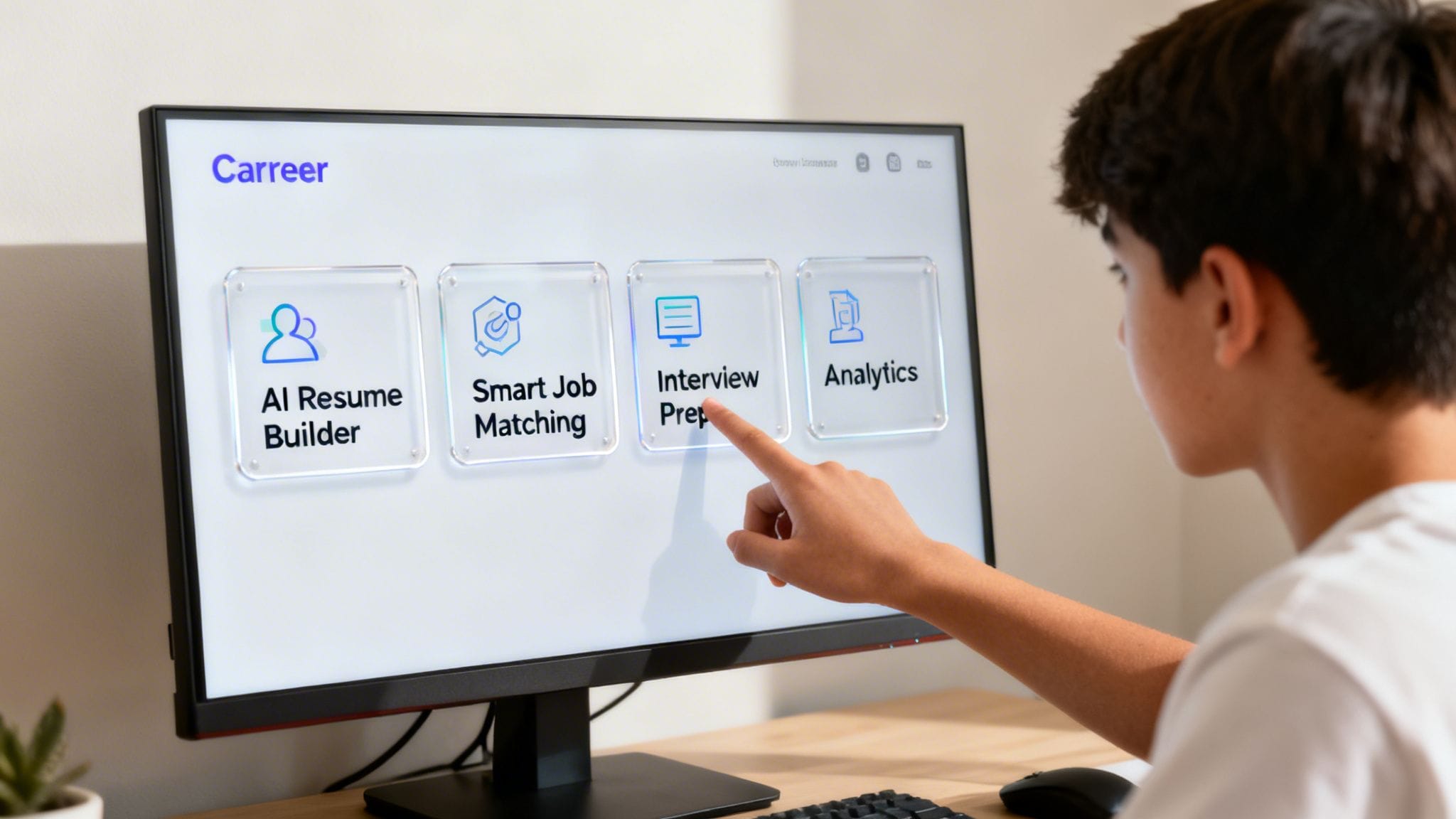
- AI-Powered Resume Builder: Helps students create resumes that are optimized to get past ATS, with keywords automatically suggested from job descriptions.
- Intelligent Job Matching: The platform’s algorithms analyze a student's profile, skills, and even coursework to surface relevant opportunities they might have completely missed otherwise.
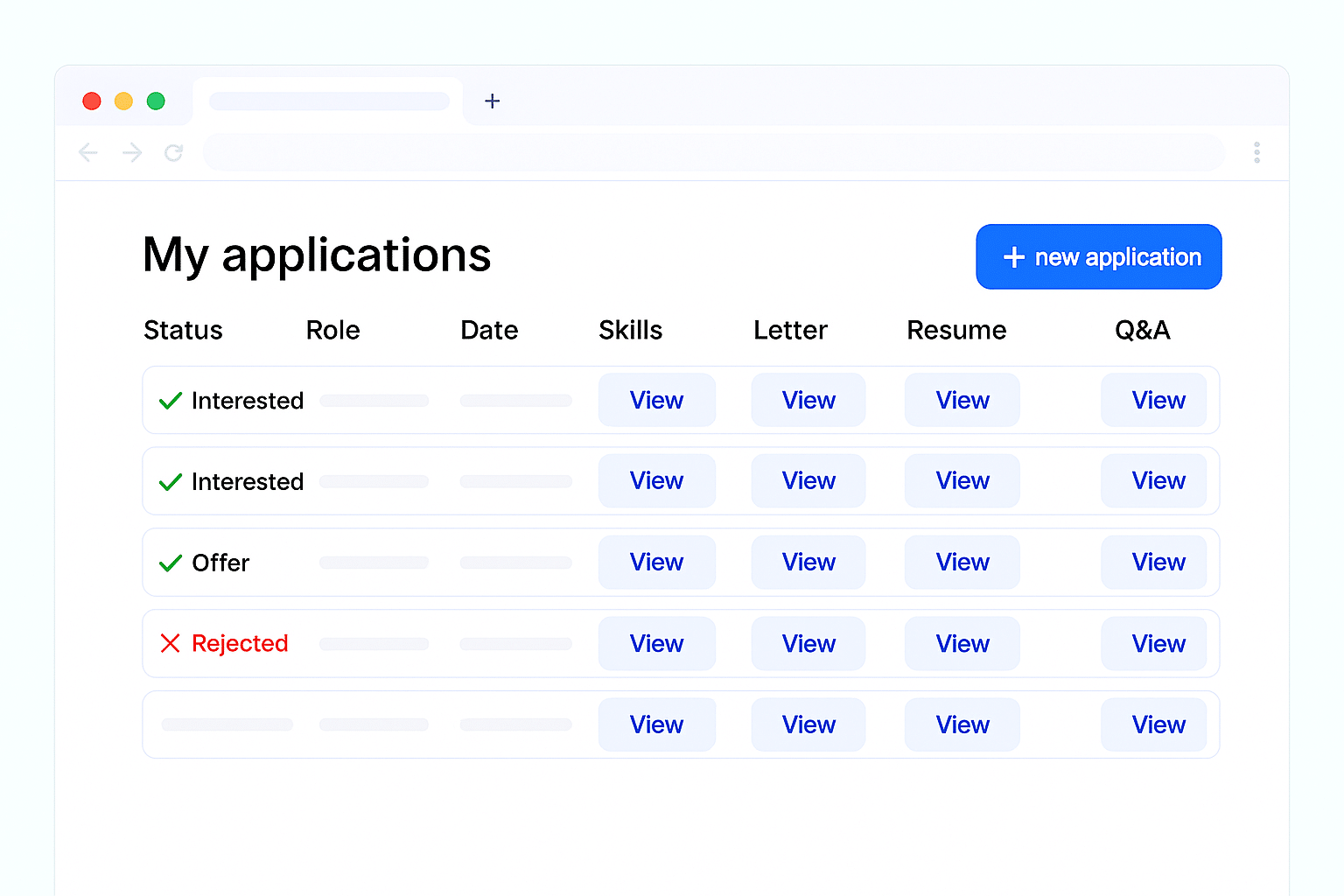
- Integrated Application Tracker: A central hub where students can manage all their applications, see where they stand in the process, and get reminders to follow up.
- Interview Preparation Tools: Students get access to mock interview simulators and AI-generated questions tailored to the specific roles they’re targeting, which is a huge confidence booster.
By providing these tools under your brand, you’re not just offering a service; you are equipping your students with a branded career accelerator that they can access 24/7. This reinforces your institution’s commitment to their long-term success.
Key Benefits for Your University and Students
When a university invests in a white label career platform, the benefits aren't just one-sided. It’s a powerful move that pays dividends for both the institution and its students, creating a clear return on investment that shows up in your reputation and their career outcomes.
For the university, it's about cementing your brand and backing up your promises with real employment data—metrics that are more important than ever.
For students, the impact is immediate and practical. They get their hands on sophisticated tools that help them build confidence and compete for the best jobs from their very first application.
Strategic Advantages for Your University
Integrating a career platform with your university’s branding changes the game. Your career services department goes from being a passive resource to an active, daily partner in your students' professional lives. Every time they log in, they see your logo and are reminded of your commitment to their future, forging a stronger bond that lasts well beyond graduation.
Here are the main benefits for your institution:
- Enhanced Institutional Prestige: Offering a modern, custom-branded platform shows that your university is serious about innovation and student success. It’s a powerful signal to prospective students, parents, and corporate partners that you invest in tangible outcomes.
- Stronger Alumni Engagement: The platform isn't just for current students. By extending its services to alumni, you provide lifelong career support. This creates a fantastic reason for them to stay connected, which can open doors for networking, mentorship, and even fundraising.
- Improved Graduate Employment Statistics: This might be the most crucial advantage. A good platform provides concrete analytics on how students are engaging, how successful their applications are, and what their employment rates are. These are the hard numbers that directly impact university rankings and attract high-caliber applicants.
A university’s ability to prove its graduates are job-ready is no longer a "nice-to-have." It’s a core component of its value proposition, and a white label platform provides the tools and the data to prove it.
Think of it this way: using a generic, third-party tool is like putting another company's vending machine in your student union. A white label platform is like opening your own university-branded café—it meets the same need but builds your brand and creates a sense of community.
Direct Benefits for Your Students
While the university is strengthening its position, students are getting an immediate and practical boost. A white label career platform for universities gives them the specific tools they need to tackle the modern job search. It effectively levels the playing field, ensuring every student has access to first-rate career support, no matter their major or background.
This table shows just how much the student journey is improved:
| Without a Platform (The Old Way) | With a White Label Platform (The New Way) |
|---|---|
| Writing a generic resume for every job. | Creating AI-tailored resumes optimized for each specific role. |
| Feeling unprepared for tough interviews. | Practicing with mock interview simulators and targeted questions. |
| Manually tracking applications in a spreadsheet. | Using an integrated dashboard to manage progress and follow-ups. |
| Guessing which skills are most valuable. | Getting data-driven analysis of skill gaps against job descriptions. |
This shift takes students from feeling uncertain to feeling confident and prepared. They're no longer just getting advice; they are actively building better application materials and practicing with tools that reflect what today’s top companies actually use.
A Personalized Career Accelerator
At its core, the platform turns a general service into a personalized career accelerator. It understands that a one-size-fits-all approach to career prep is outdated. An art history major simply needs different support than an engineering student, and the platform can adapt to both.
- For the Senior: They can use it to perfect their resume for a dream job, check it against an ATS scanner, and run through mock interviews for that final-round meeting.
- For the Sophomore: They can explore different career paths, see which skills they need to develop, and find relevant internships that complement their studies.
By offering these resources under your university's trusted brand, you create a seamless, supportive experience. It’s a single investment that builds student confidence, equips them for success, and ultimately solidifies your institution’s reputation as one that truly launches careers.
Must-Have Features of a Modern Career Platform
When you're looking at career platforms, it's easy to get lost in a long list of features. But the real difference isn't what the platform does, but why those features matter for your students. The best tools don't just add more bells and whistles; they work together to transform a stressful job hunt into a clear, manageable process.
Think about it from a student’s perspective. Imagine someone applying for a tough-to-get role in tech. The platform scans their resume, immediately points out that adding "Python" and "data analysis" will help them get past the initial screening software, and then helps them draft a cover letter that echoes the company's energetic tone. That whole sequence takes minutes, not hours. That’s the kind of impact we’re talking about.
AI Application and Optimization Tools
The first big hurdle for any student is the Applicant Tracking System (ATS). This is the gatekeeper software that unfortunately knocks out over 75% of resumes before a real person even lays eyes on them. Modern career platforms are built to face this challenge directly with smart AI tools. These aren’t just glorified spell-checkers; they're designed to give students a real competitive advantage.
Here’s what that looks like in practice:
- Resume and CV Analysis: A student uploads their resume and the job description they’re targeting. The AI instantly cross-references the two, flagging crucial keywords they're missing and suggesting specific skills to include. This alone dramatically boosts their odds of getting past the ATS filter.
- Targeted Content Generation: The platform can generate tailored bullet points for their resume or even draft entire cover letters. This not only saves students a ton of time but helps them frame their experience in a way that actually grabs a hiring manager’s attention. You can see how a white-label AI resume builder can completely change this part of the process.
- Tone and Style Matching: Some of the more advanced AI can even tweak the tone of a cover letter. It can help a student sound buttoned-up and formal for a corporate giant or shift to a more casual, creative vibe for a startup.
Smart Job Matching and Interview Prep
Once a student has a knockout application, the next step is finding the right opportunities and then nailing the interview. A great platform essentially becomes their personal talent scout and interview coach. Instead of dumping a giant, unfiltered list of jobs on them, it uses smart algorithms to dig up the roles that are a perfect fit.
A platform's real value comes from its ability to connect a student's academic journey to real-world job requirements, building a bridge between classroom learning and career success.
This is where intelligent job matching shines. The system looks at a student's entire profile—their coursework, skills, side projects, and stated interests—to recommend jobs they are uniquely qualified for but might have never found on their own. It goes beyond simple keywords to understand the context of their experience and potential.
Then, once they land an interview, the platform switches gears into prep mode.
| Feature | Student Benefit |
|---|---|
| AI Interview Simulator | Gives them a safe space to practice answering common and role-specific questions. |
| Personalized Question Bank | Creates a list of likely questions based on the job ad and the student's resume. |
| Feedback and Analysis | Offers concrete tips on answer structure, pacing, and word choice to build confidence. |
Centralized Dashboards and Analytics
For students, juggling dozens of applications can feel like pure chaos. A centralized dashboard brings all of that into one organized space. They can track the status of every application, set reminders for follow-ups, and see their entire job search landscape at a glance.
This visibility is just as crucial for university administrators. A powerful analytics dashboard gives you a real-time window into student engagement and outcomes. You can see which tools are getting the most use, what kinds of jobs students are landing, and where they might be hitting roadblocks. This data is gold for proving the platform's ROI and fine-tuning your career services strategy.
Relying on this kind of data is quickly becoming the standard. Projections show that by 2026, over 80% of companies will use AI-powered apps in their hiring. On the university side, research shows that schools using white-label solutions have seen 53% better placement results, and platforms that help personalize applications can boost interview rates by 40%. You can dig into more of these powerful marketing industry trends on pit.edu.
How to Drive Student Adoption and Engagement
You can have the best career platform in the world, but if students aren’t logging in, it’s just an expensive line item in your budget. Launching a white label career platform for universities isn't just about flipping a switch; you need a smart plan to weave it directly into campus life. Without that, even the most powerful tool can end up collecting dust.
The trick is to meet students where they already are, showing them the platform's value from the moment they step on campus. This takes more than a simple announcement email—it calls for a real launch campaign that gets people talking and builds genuine excitement.
Weave the Platform into the Student Journey
For your new platform to feel essential, it needs to show up in the places students already look for guidance. Don't position it as another optional app they have to download. Frame it as a core part of their academic and professional growth from day one.
Here are a few powerful ways to integrate it:
- First-Year Orientation: Introduce the platform right away. Position it as the university’s official tool for exploring majors, finding internships, and getting career-ready.
- Career Development Courses: Make the platform a required part of the curriculum for career-focused classes. Think assignments like building an AI-optimized resume or running a job match analysis.
- Faculty & Advisor Training: Get your academic advisors and professors on board. When a trusted faculty member recommends the platform during an advising session, students actually listen.
By embedding the tool into these key moments, it stops being "one more thing to do" and becomes "how we do things here."
Create a Buzz with Engaging Launch Campaigns
Your rollout should have the same energy as the students you're trying to reach. A great launch creates momentum that can drive engagement for years. My advice? Think less like a university department and more like a tech company launching a cool new app.
The most successful launches I've seen focus on showing immediate, tangible value. Host a workshop where students can build a perfectly tailored, ATS-beating resume in under 10 minutes. When they see that kind of instant win, they're hooked.
Here are a few campaign ideas to get you started:
Launch Week Activities
| Activity | Goal |
|---|---|
| On-Campus Pop-Ups | Set up booths in high-traffic spots like the student union or library quad. |
| Social Media Contests | Run a giveaway on Instagram or TikTok where students share their dream job. |
| Gamified Challenges | Offer small prizes (coffee gift cards!) for completing a profile or the first AI resume scan. |
To keep students coming back, remember that a smooth, intuitive user experience is everything. It helps to apply best practices from higher education website design to ensure your platform feels effortless to use.
Empower Your Staff as Platform Champions
Your career services staff are your secret weapon. Their belief in the platform will directly shape how students see it. It’s crucial to train them not just on the features, but on how to sell the solution to a student’s problem.
Invest in thorough training so your team can become true champions of the tool. When they are excited and can speak from experience, that enthusiasm is contagious. This kind of thoughtful rollout ensures your investment pays off from day one. For a more detailed guide, you can learn more about how to launch a university AI career platform with JobWinner in 7 steps.
Measuring Success and Demonstrating ROI
Bringing a new platform on board is a big commitment. But how do you prove it’s actually making a difference for your students and your institution? The real strength of a white label career platform for universities is its ability to give you clear, measurable data. This shifts the conversation from vague anecdotes to concrete evidence of the platform’s value.
For too long, career services had to rely on fuzzy metrics like workshop attendance or the number of appointments booked. A modern platform changes the game entirely, replacing those old numbers with hard data that ties directly to what leadership cares about: improving graduate employment rates and boosting university rankings.
Identifying Key Performance Indicators
The first step is simply knowing what to look for. A good analytics dashboard does the heavy lifting, turning all that raw user activity into a compelling story of student progress. You get a clear view of the entire student journey, from the moment they first log in to the day they land a job offer.
Here are the essential KPIs you should be tracking:
- Student Engagement Rates: This is your baseline. You need to know what percentage of students have activated their accounts, filled out their profiles, and are regularly using the platform's tools. Strong engagement is the first green flag that you're on the right track.
- Application Quality and Volume: Go beyond just counting applications. Look at how many students are creating tailored resumes and cover letters. This shows they’re not just spamming job boards but are using the AI tools to build competitive, high-quality applications that stand out.
- Interview Callback Rates: This is where the magic happens. When you see an increase in interview invitations, you have powerful proof that the platform is working. It means those AI-optimized resumes are getting past automated screening systems (ATS) and grabbing the attention of real hiring managers.
Connecting Platform Data to University Goals
While student-focused metrics are crucial, the ultimate goal is to show a clear return on investment (ROI) for the university. The data you gather is what builds the business case for the technology, connecting your department's work directly to the institution's strategic priorities. This is how you translate platform usage into institutional wins.
This table gives you a simple way to link specific platform metrics to those bigger university objectives.
| Platform Metric | University Goal |
|---|---|
| Increased Interview Callback Rates | Demonstrates improved student competitiveness and career readiness. |
| Higher Student Engagement | Shows the value students see in the tool, boosting student satisfaction. |
| Reduced Time-to-Employment | Directly impacts graduate employment stats, a key factor in university rankings. |
| Alumni Platform Usage | Strengthens alumni relations and creates a valuable network for current students. |
By tracking these connections, you can create powerful reports for stakeholders that show exactly how the white label career platform for universities is elevating the institution's reputation. You can see how other schools are putting this into practice by exploring these career platform case studies.
The ability to tie platform usage directly to graduate employment outcomes allows you to secure funding, attract top-tier students, and cement your reputation as an institution that launches successful careers.
The impact is becoming undeniable. Since the recent surge in AI adoption within HR, 70% of partner universities using these white-label solutions have reported 28% higher placement rates. In pilot programs, features designed for interview prep and application tracking have boosted interview callback rates by an incredible 50%. You can discover more insights about the future job market on Monster.com. This kind of data proves the platform isn’t just a helpful tool for students—it's a strategic asset for the entire institution.
Common Questions About White Label Career Platforms
Making the decision to bring in a new technology partner is a big one. It's only natural for university leaders to have questions before committing to a white label career platform for universities. Let's walk through some of the most common concerns we hear and give you the straight answers you need.
How Difficult Is Implementing a White Label Platform?
This is usually the first question, and for good reason—no one wants a massive IT headache. The reality is, the best providers have made the implementation process incredibly smooth. They do all the heavy lifting, from applying your university’s branding and colors to securely migrating student data.
The goal is to get your custom platform up and running in a matter of weeks, not months. Your team will get all the training needed to become experts, while the provider handles the ongoing backend work like maintenance, security patches, and software updates. It frees your staff to focus on what they do best: guiding students.
Is a White Label Platform Secure for Student Data?
Absolutely. For any serious provider, data security is a non-negotiable pillar of their service, not just another feature. They should be using industry-standard encryption to protect every piece of student information, both when it's being transmitted and when it's stored.
Before you sign any contract, always ask for proof of their security protocols and compliance certifications. Look for adherence to major privacy regulations like GDPR and CCPA. This confirms they're serious about protecting your students' sensitive data.
The trust your students have in your institution extends to every tool you offer. A quality partner will be completely transparent about their security measures because they know how much is on the line.
Can the Platform Be Customized for Our University?
Yes, and the customization goes much deeper than just adding a logo. Think of the best platforms as modular. You can pick and choose the tools and features that make the most sense for your specific student body.
For example, you could fine-tune the platform to serve the distinct needs of different departments.
- Engineering School: You could emphasize tools for building technical resumes and prominently feature employer partners in the tech sector.
- Arts & Humanities: The focus could shift to features that help students develop professional portfolios and learn how to market their academic skills.
This level of tailoring makes the platform feel like it truly belongs to your university, rather than being a generic, one-size-fits-all solution. This adaptability is also a huge plus for career coaches, a topic we explore in our guide to the top 5 AI career platforms for career coaches.
How Does This Platform Help Nontraditional Students?
A white label career platform for universities is an absolute game-changer for nontraditional students, veterans, and career changers. These students often share a common hurdle: figuring out how to translate their valuable life and work experience into the language of a new field.
This is where the platform's AI tools really shine. They can help a student pinpoint transferable skills from a past job, reframe their entire resume for a new industry, and build the confidence to walk into an interview in a field that feels completely foreign. It essentially helps them rewrite their professional story for the next chapter.
Ready to see how a branded, AI-powered career platform can transform your student outcomes? JobWinner provides a fully white-labeled solution that equips your students with the tools they need to succeed. Learn more and schedule a demo today!