 EN
EN  ES
ES  IT
IT  FR
FR 
When you’re trying to choose between JobWinner and JobCopilot, it boils down to one fundamental question: do you want to apply smarter, or do you want to apply faster? The core difference is strategic quality versus mass volume. Your answer will shape your entire job search.
A Quick Breakdown For Job Seekers
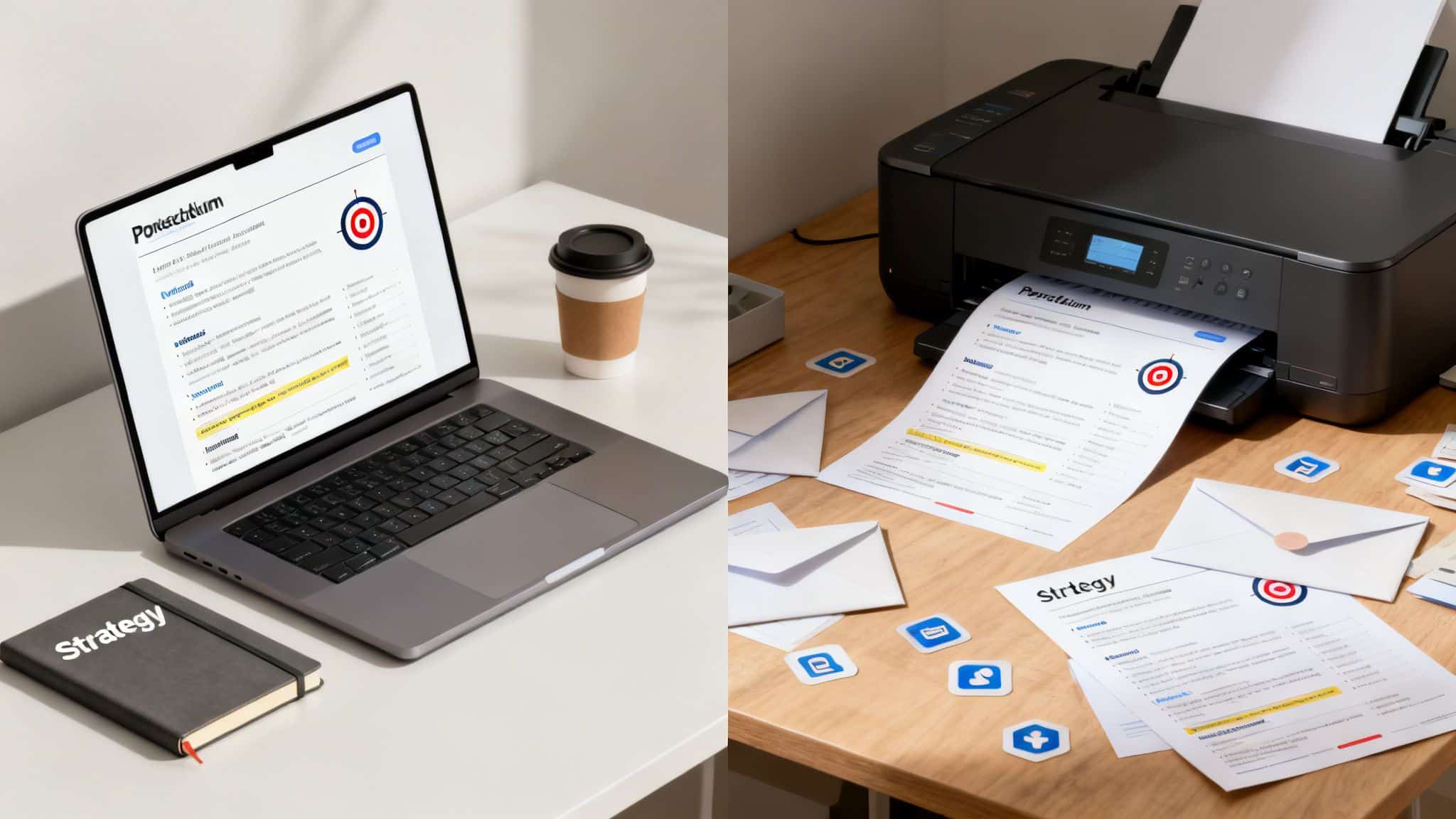
Let’s be honest, the modern job market can feel like shouting into the void. It’s not uncommon for people to send out anywhere from 32 to over 200 applications just to land a single offer. When you consider that the success rate for online applications often sits at a dismal 0.1% to 2%, you realize you need a solid game plan.
This reality forces you to pick a lane:
- Quality: Sending fewer, highly tailored applications to the jobs you really want.
- Quantity: Sending a massive number of generic applications and hoping something sticks.
The AI job search assistant you choose is your co-pilot for that strategy, so picking the right one is critical.
JobWinner vs JobCopilot: Core Philosophy and Key Differentiators
At their heart, these two platforms are built for completely different job search philosophies. JobWinner is for the professional who believes every application should be a targeted shot, while JobCopilot is for someone who prefers a “spray and pray” numbers game.
The table below gives a high-level look at how their approaches differ, who they’re for, and what you can expect from each.
| Aspect | JobWinner (Quality & Strategy) | JobCopilot (Volume & Speed) |
|---|---|---|
| Primary Goal | To secure high-value interviews with targeted applications. | To submit as many applications as possible in the least time. |
| Method | Smart automation that customizes resumes for each job. | Brute-force automation that sends one generic resume to many jobs. |
| Ideal User | Career-focused professionals, career changers, and new grads. | Individuals applying to high-volume, lower-skilled roles. |
Ultimately, JobWinner acts as a strategic partner, helping you craft applications designed to impress both applicant tracking systems (ATS) and the human beings reading them. JobCopilot, on the other hand, is a firehose—it gets your resume out there, fast.
Of course, finding the right tool is only half the battle. You also need to know where to find remote jobs that are a good fit in the first place. Once you do, your choice between these two platforms will define your campaign’s success. To get a better handle on this, you can learn more about how https://jobwinner.ai/resume/how-ai-transforms-your-job-search-beat-ats-land-better-jobs-and-save-time/ can help you beat the odds.
A Look Under the Hood: The AI Driving Each Platform

When you’re deciding between JobWinner vs. JobCopilot, it’s easy to get lost in feature lists. But the real difference—the one that directly impacts your success—is the artificial intelligence engine running the show. The distinction here isn’t just technical jargon; it’s the difference between a smart, customized approach and a blunt, one-size-fits-all tool.
JobWinner is built on a multi-agent AI system. Think of it like having a small, dedicated crew of specialists working just for you. Each “agent” is a pro at its specific task:
- Resume Agent: Dives deep into a job description, then strategically rewrites your experience to mirror the exact skills and keywords the employer wants to see.
- Cover Letter Agent: Analyzes the company’s voice and the role’s pain points to write a letter that feels personal and relevant.
- Job Fit Agent: Gives you a straight-up score, showing you exactly how your profile stacks up and where the gaps are.
These agents don’t work in isolation. They communicate with each other, sharing insights to build an application package that is cohesive, polished, and looks like it was meticulously put together by hand. If you want to see more on how this technology works in practice, our guide on the best AI resume tailoring tools is a great place to start.
The Two Different Architectures
JobCopilot, on the other hand, runs on a single-agent architecture. Its AI has one core mission: get as many applications out the door as fast as possible. It works like a sophisticated mail merge, taking your one static resume and blasting it out across the board.
This is a strategy of pure brute force. While you’ll definitely hit a high volume of submissions, it’s a method that modern Applicant Tracking Systems (ATS) are specifically designed to catch and filter out. Recruiters are getting better and better at spotting generic, copy-paste applications.
Expert Tip: Think of it this way. JobWinner is like having a team of specialist doctors who collaborate on a complex diagnosis for a single patient. JobCopilot is like a single pharmacist handing out the same over-the-counter medicine to everyone who walks in, no matter their symptoms.
This core technical difference leads to wildly different results. The multi-agent approach in JobWinner produces applications that feel authentic and genuinely tailored to the role. In contrast, the single-agent method used by JobCopilot creates identical, repetitive submissions that savvy recruiters can spot and toss in an instant.
The data backs this up. Recent studies on recruitment automation show that multi-agent AI systems can resolve complex tasks 45% faster and deliver 60% more accurate outcomes than single-agent models. It’s no wonder that 40% of enterprises are already planning to integrate this kind of smart automation into their hiring processes.
A Head-to-Head Feature Analysis

Theory is one thing, but how these tools perform in the real world is what truly matters. Let’s look at a common scenario to see the difference between JobWinner and JobCopilot in action: a sharp marketing professional aiming to pivot into a data analyst role. This isn’t just about changing a job title; it’s about completely reframing her skills and experience.
Let’s follow a candidate, we’ll call her Sarah. Her resume is packed with marketing achievements, but she needs to show she has the analytical chops for a “Junior Data Analyst” position.
The JobWinner Approach: Customization in Action
Sarah uploads her current marketing resume and the data analyst job description to JobWinner. The platform’s AI immediately starts its work, but it’s doing more than just looking for keywords—it’s reading for context. It quickly pinpoints transferable skills that were hidden behind marketing jargon.
Here’s a perfect example of how JobWinner reworks a bullet point from her old resume:
Example: Resume Transformation
- Before (Marketing Resume):
“Managed a $50,000 quarterly ad budget, optimizing campaigns to increase lead generation by 15%.”JobWinner recognizes that “optimizing campaigns” is fundamentally a data analysis task. It rephrases the bullet point to speak the language of a data analyst, emphasizing the analytical process and its measurable result.
- After (JobWinner’s Tailored Resume):
“Analyzed a $50,000 quarterly budget dataset to identify performance trends, implementing data-driven adjustments that improved lead generation metrics by 15%.”
That subtle change makes a world of difference. It shifts the entire focus from marketing administration to data analysis, which is exactly what she needs to get past an Applicant Tracking System (ATS) and catch a recruiter’s eye. After its adjustments, the tool even gives her a job-match score of 82%, confirming her resume is now strongly aligned with the role.
The JobCopilot Method: The One-Size-Fits-All Gamble
Now, let’s run the same scenario through JobCopilot. The process is much faster, but that’s precisely the problem. Sarah simply uploads her single, marketing-focused resume.
JobCopilot isn’t built to analyze or adapt; its core function is mass deployment. Sarah tells it to apply to 50 data analyst jobs, and the tool obediently blasts her marketing resume out to every single one, completely unchanged.
The “before” bullet point is what every recruiter and ATS will see:
- “Managed a $50,000 quarterly ad budget, optimizing campaigns to increase lead generation by 15%.”
An ATS scanning for terms like “SQL,” “Python,” or “data modeling” will almost certainly skip right over this. A human recruiter, giving the resume a 10-second glance, will see “ad budget” and “lead generation” and toss it in the ‘no’ pile, assuming Sarah applied to the wrong opening. The valuable, transferable skill is totally lost in translation.
For a deeper dive into how different platforms compare, you can check out more tool comparisons to find what aligns with your job search strategy.
The difference in philosophy becomes crystal clear when you break down the features side-by-side. One tool focuses on making each application count, while the other is all about volume.
Application Feature Breakdown: Quality vs Quantity
| Feature | JobWinner’s Strategic Approach | JobCopilot’s Volume Approach |
|---|---|---|
| Resume Analysis | Deeply analyzes each job description to extract core skills and reframe your existing experience for that specific role. | No analysis is performed. It uses one static, generic resume for every single application. |
| Content Customization | Actively rewrites bullet points and skill sections to highlight the most relevant abilities for the target job. | No customization at all. Your original resume content is sent out as-is, regardless of the role. |
| Keyword Optimization | Intelligently integrates critical keywords (like “analyzed dataset”) to ensure the resume passes modern ATS filters. | Fails to add any new, role-specific keywords, dramatically increasing the risk of getting filtered out by an ATS. |
| Cover Letter Generation | Creates a unique cover letter for each application, often explaining a career pivot and connecting past experience to the new role. | Sends a generic, template-based cover letter (if any), which often feels impersonal and irrelevant. |
| Outcome | A highly tailored application that skillfully positions Sarah as a strong, viable candidate for the data analyst position. | A generic application that misrepresents Sarah as a marketer applying for the wrong job, leading to quick rejection. |
This head-to-head comparison exposes the fundamental divide. JobWinner builds a bridge for career changers like Sarah, translating their past into a compelling future. JobCopilot, on the other hand, leaves them stuck with a document that doesn’t speak the right language. One approach helps you get seen by a person; the other gets you lost in the digital slush pile.
Hitting “submit” on a job application isn’t the end of the road—it’s just the beginning of the long, anxious wait. This is where the real difference between JobWinner and JobCopilot starts to show. Once your application is out the door, JobCopilot’s job is finished, and you’re left to figure out the next steps on your own. JobWinner, on the other hand, sticks with you.
Think about it. The average hiring process can drag on for weeks. Most of us try to keep track with a messy spreadsheet or a random collection of notes, which is a recipe for disaster. It’s so easy to lose track of when you applied, who you talked to, or when you should follow up. A simple mistake can cost you a fantastic opportunity.
Ditching the Spreadsheet for a Real Strategy
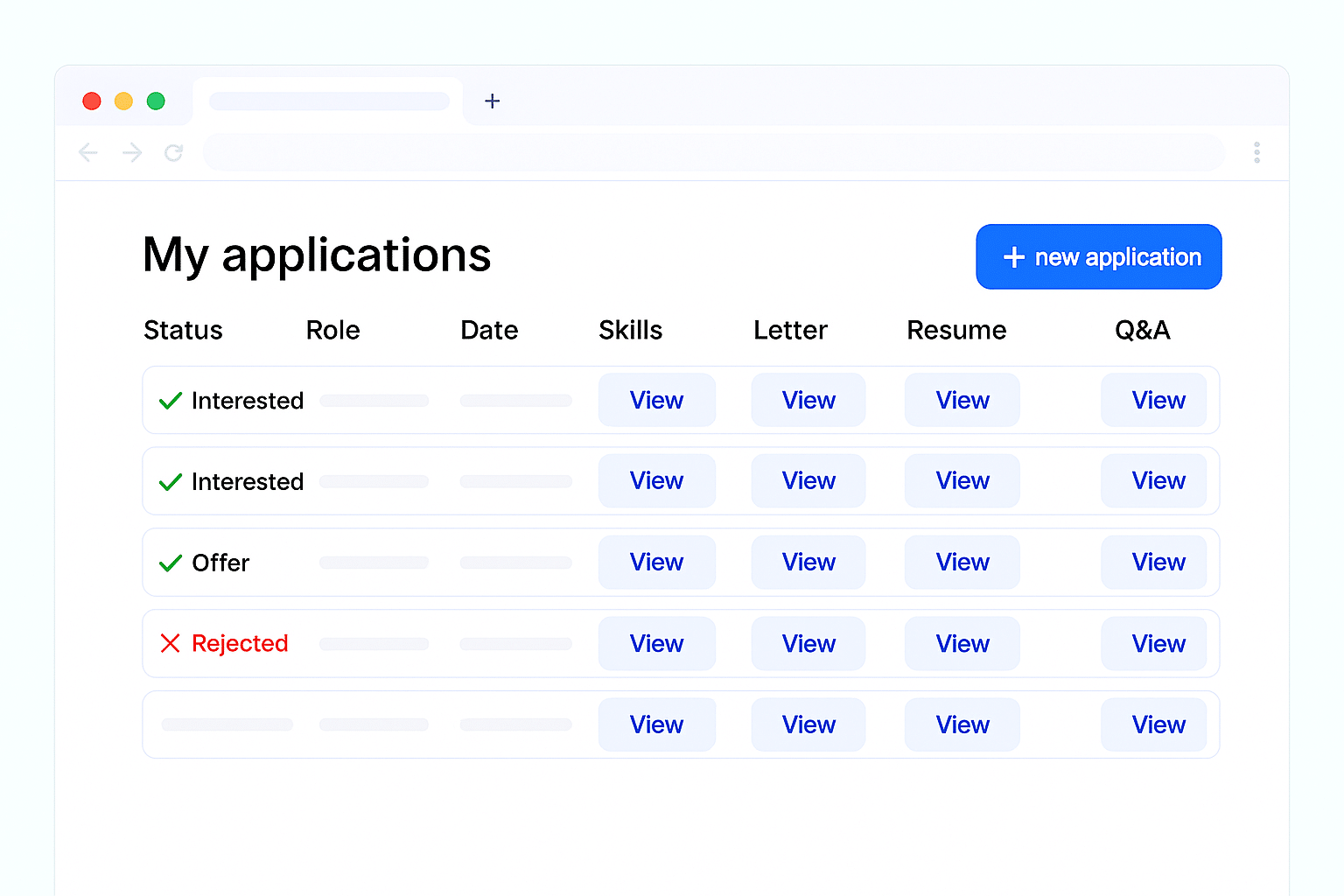
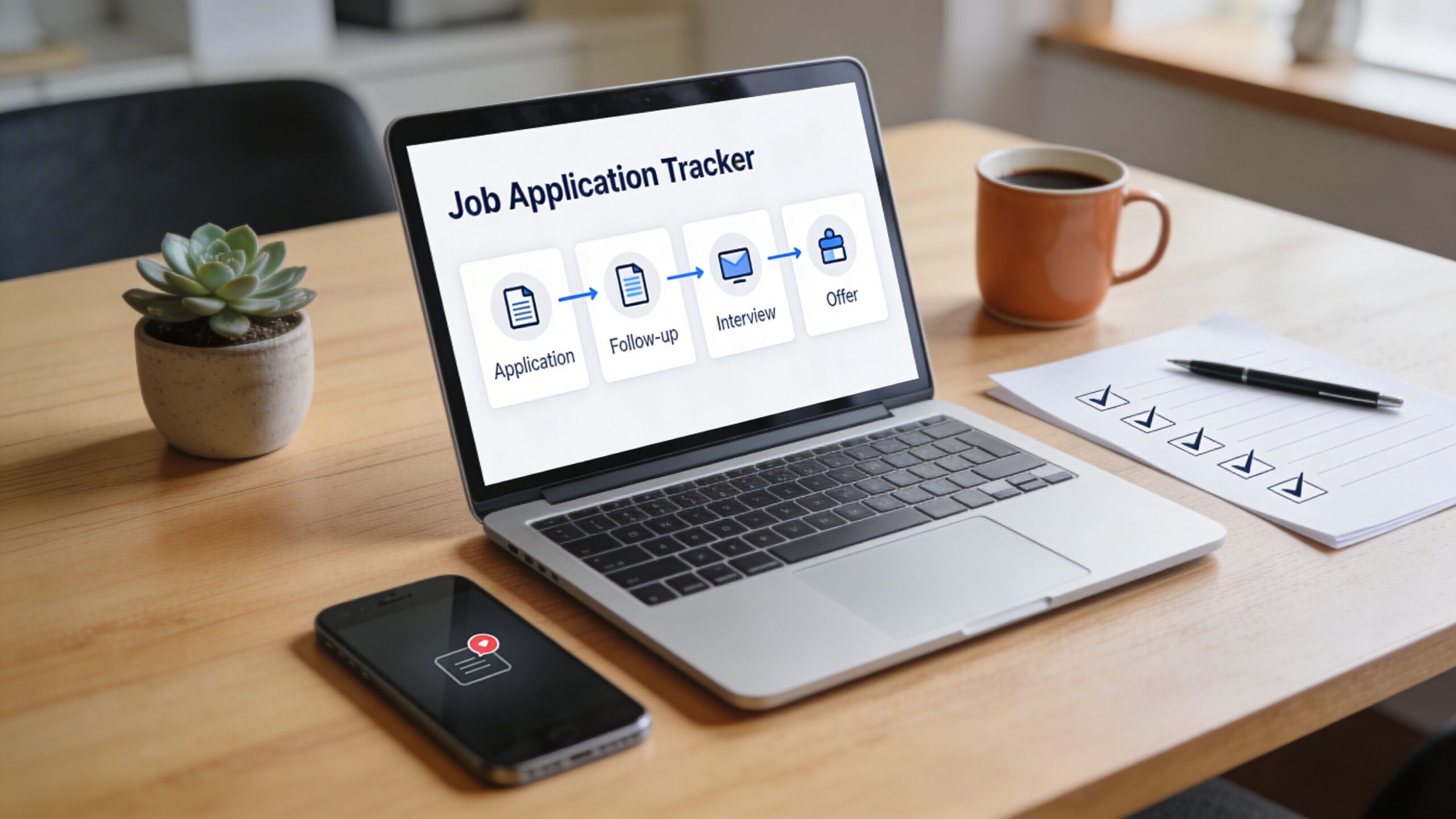
This is exactly the kind of chaos JobWinner is built to prevent. It has an integrated Application Tracker that automatically logs every single application you send out. Instead of juggling files and calendar reminders, you get a clean dashboard that shows you exactly where everything stands.
Let’s say you applied for a ‘Senior Project Manager’ role. A week goes by. Instead of that application getting buried and forgotten, JobWinner sends you a notification, reminding you it’s time to follow up. It’s a simple but powerful feature that keeps good opportunities from slipping away. JobCopilot doesn’t offer anything like this; you’re completely on your own.
We’ve all seen it happen. The best opportunities aren’t lost because someone wasn’t qualified; they’re lost because they failed to follow through. A good tracking system turns your job search from a bunch of one-off applications into a managed, strategic campaign.
This kind of organized approach is more critical than ever. As AI reshapes the hiring process, the major downside of mass auto-apply tools like JobCopilot is becoming clear—they’re leading to historically low interview rates. In this environment, where success rates can be as low as 0.1-2%, platforms that support the entire journey are the ones helping job seekers actually get results. You can read more about these AI hiring trends and the risks of mass applying on DigitalJournal.com.
Getting Ready for the Interview
So, your follow-up paid off and you landed the interview for that Senior Project Manager job. Now what? This is another place where JobWinner really shines. The platform includes an Interview Preparation tool that looks at both your resume and the job description to predict the kinds of questions you’ll be asked.
It doesn’t just spit out a generic list. It gives you smart, tailored questions you can actually expect to hear, such as:
- “Describe a time you managed a project that was behind schedule. What steps did you take to get it back on track?”
- “How have you used stakeholder feedback to adjust a project’s scope and deliverables?”
Better yet, the tool coaches you on how to structure your answers using the STAR method (Situation, Task, Action, Result). This helps you turn your experiences into compelling stories that prove you have what it takes. Since JobCopilot is only focused on the initial application, it has no features to help you nail this make-or-break stage.
This is a huge part of the support you get, and you can learn more about overall job application assistance in our detailed guide. At the end of the day, JobWinner is designed to help you feel confident and prepared from the moment you apply to the day you get an offer. It’s a full-process partner, not just a tool for firing resumes into the void.
Which Tool Is Right for Your Career Goals?
Features are one thing, but the real question is how a tool fits into your actual job search. When you’re weighing JobWinner against JobCopilot, your specific career goals should be what guides your decision. To make it clearer, let’s walk through a few common scenarios I see all the time.
The Career Changer
Picture a former teacher trying to break into instructional design. On its own, “classroom management” doesn’t mean much to a corporate recruiter. What they need to do is reframe that experience into language hiring managers understand, like “stakeholder communication” or “curriculum development.”
This is where a tool like JobWinner really shines. It’s built to translate those skills. It can take a bullet point about lesson planning and instantly rewrite it to emphasize core instructional design principles. For anyone changing careers, that’s not just a nice feature—it’s what gets your foot in the door.
The New Graduate
Now, think about a new grad with a marketing degree. They’re stepping into a packed field with little professional experience, often competing with hundreds of other people for the same entry-level job. Their biggest challenge? Just getting past the first automated screening.
JobWinner gives them a much-needed edge with its focus on ATS optimization. It automatically analyzes a job description and helps align the resume with the right keywords and skills. This simple step can be the difference between a human seeing their application and getting filtered out by a machine before the race even starts.
This decision tree breaks down the key questions to ask when figuring out what kind of support you need.
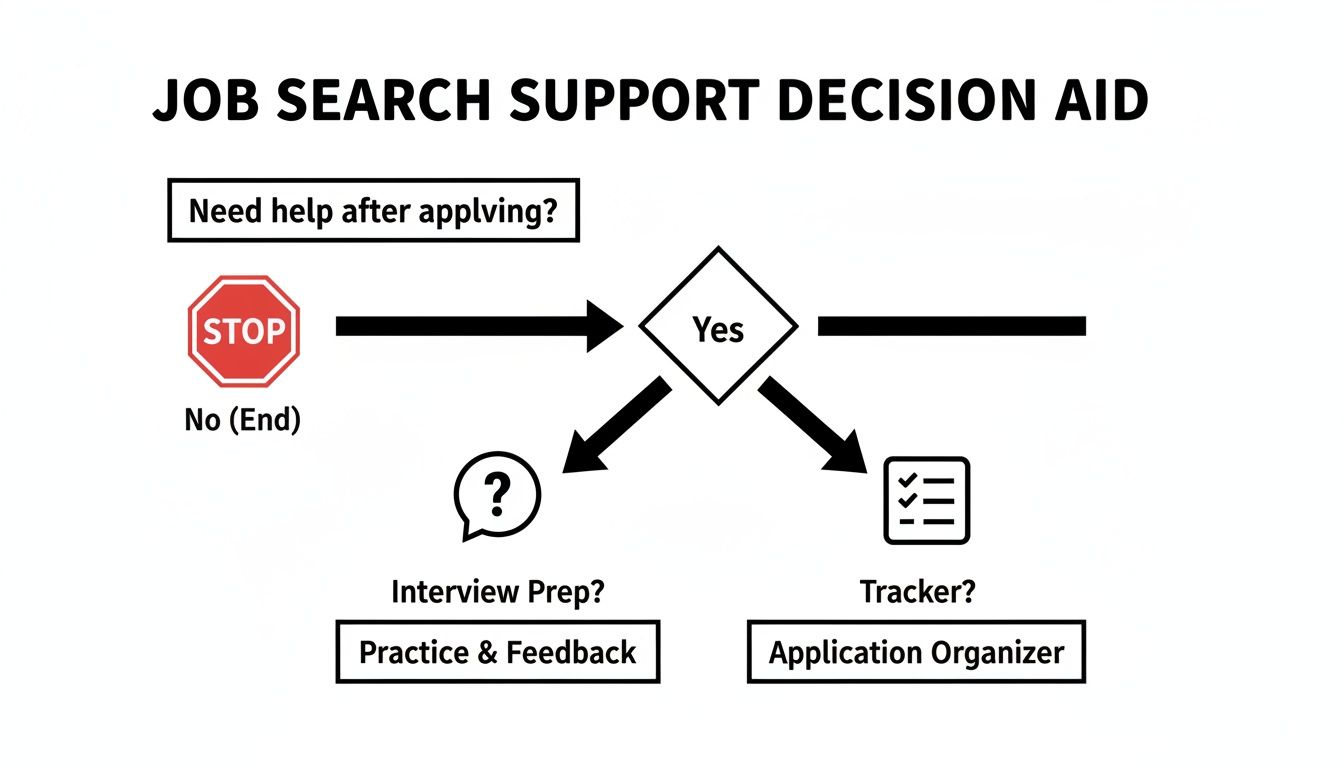
As you can see, if you need help with more than just submitting an application—like tracking your progress or preparing for interviews—you’ll want a more comprehensive tool in your corner.
The Passive Job Seeker
Finally, let’s consider the software developer who’s currently employed but keeping an eye out for a better opportunity. They simply don’t have the time to rewrite their resume for every single interesting role that pops up.
JobWinner automates that entire process. It lets the developer generate a tailored resume and cover letter in minutes, making it practical to explore the job market without it turning into a second full-time job. While you’re at it, remember that your online presence is just as important, so take some time to optimize your LinkedIn profile for success.
A Quick Note: In fairness, there is one specific situation where a tool like JobCopilot makes sense: applying for high-volume, low-skill gig work. In those cases, personalization is pretty much useless, and raw speed is all that matters.
For almost any other professional goal, whether you’re switching fields or just looking for your next big promotion, a strategic and personalized approach wins out. It all comes down to whether you’re playing a numbers game or a strategy game.
The Final Verdict: Why Strategy Outperforms Speed
When you step back and look at the job market, you see two clear paths: the volume game and the value game. This is really what the JobWinner vs JobCopilot choice boils down to.
JobCopilot’s “spray and pray” approach is tempting, I get it. Firing off dozens of applications feels productive. But the hard truth is that you’re often just feeding automated rejection filters. Recruiters use Applicant Tracking Systems (ATS) specifically to weed out generic applications, and a high-volume strategy almost guarantees you’ll get caught in that net. You end up playing a numbers game where the house always wins.
Work Smarter, Not Harder
This is where you need to pivot your thinking. JobWinner is built on a completely different philosophy. It automates the soul-crushing parts of the job hunt—like tweaking your resume for the tenth time or drafting yet another cover letter—so you don’t have to.
Human-in-the-Loop Tip: Think of your job search not as a series of random applications, but as a strategic campaign you fully intend to win. Every move should be calculated to get you closer to your goal.
Freeing up that time and mental energy is the real game-changer. It allows you to pour your efforts into what actually moves the needle:
- Building connections.
- Researching companies you’re genuinely excited about.
- Absolutely nailing your interviews.
Each application becomes a targeted strike, not just another number. Ultimately, JobWinner isn’t just a tool for applying to jobs; it’s a partner in your career strategy. It gives you the focus and precision you need to run a successful search and land a role you’ll actually be happy in.
Frequently Asked Questions
When you’re comparing tools like JobWinner and JobCopilot, a few key questions always seem to pop up. Let’s tackle them head-on so you can move forward with confidence in your job search strategy.
Can recruiters tell I am using an AI tool?
This is a big one, and the honest answer is: not if you’re smart about it. Recruiters can absolutely spot applications that reek of automation—think generic, repetitive submissions from a tool like JobCopilot. They see hundreds of applications and can tell when something feels off.
JobWinner is designed differently. It’s not meant to replace you; it’s there to act as your co-pilot. The goal is to refine your own experience and skills with powerful, specific language that still sounds like you. The final document is an augmented version of your work, not a robotic clone.
How much time can I realistically save?
Most JobWinner users find they get back 5-10 hours per week. Think about it: manually tailoring a resume and writing a thoughtful cover letter can easily burn an hour or two for a single application. When you can cut that down to just a few minutes, you reclaim a huge chunk of your time.
That time is much better spent on the things that actually get you hired, like networking with people at your target companies or prepping for interviews.
The 80/20 Rule for AI Tools: The single biggest mistake people make is adopting a “set it and forget it” attitude. You should always review what the AI generates. Your job is to inject your personality, double-check the details, and add that final human touch. Let the AI do 80% of the heavy lifting, while you provide the critical 20% of personal insight.
Is it effective for creative or non-technical roles?
Absolutely. It’s easy to see how these tools work for tech jobs, but the core principle—personalization—is universal. It works for any role where you need to prove you’re the right fit.
Here’s how it plays out in other fields:
- A graphic designer could use it to pull out language that highlights how their past projects align with a company’s specific brand aesthetic.
- A non-profit manager can make sure their experience is framed using the same mission-driven language found in the organization’s own materials.
- A sales professional can quickly adapt their resume to mirror the exact customer pain points mentioned in the job description.
This strategy is all about getting past the initial screening, no matter your industry. If you want to dive deeper into how that screening works, it’s worth understanding what an applicant tracking system is and how it works.
Ready to stop getting lost in the resume black hole and start landing more interviews? JobWinner gives you the strategic edge to create tailored applications in minutes, not hours. Try JobWinner today!