 EN
EN  ES
ES  IT
IT  FR
FR 
So, you landed the interview. Awesome! Take a moment to celebrate—that’s a huge step. Now, the real preparation begins, and let's be honest, it can feel a little daunting. But thinking ahead is what separates a good candidate from a great one.
It’s about more than just having answers ready. It’s about walking in with a deep understanding of the company, the role, and exactly how your experience solves their problems.
Your Game Plan for Interview Success
Feeling a bit of pressure before a big interview is totally normal. It shows you care. Think of this guide as your game plan, moving you past a quick glance at the company’s website and into a level of preparation that builds real confidence.
Getting a handle on the company culture is just as important as knowing the job's technical duties. Why? Because managers hire people, not just skill sets. They’re looking for someone who will thrive on their team. In fact, a recent survey found that over 80% of recruiters see cultural fit as a top priority.
The Building Blocks of Great Preparation
Think of this as your roadmap. We’re going to cover everything from dissecting the job description to telling a memorable story about your career wins. It really boils down to three key areas:
- Digging Deep on the Company & Role: This means going way beyond the "About Us" page. What are their recent wins? What challenges are they facing? Where do they stand in the market?
- Building Your Stories: It’s not just about what you did, but how you did it. We'll focus on framing your answers with concrete examples that prove your value.
- Nailing the Follow-Up: The interview isn't over when you walk out the door. A thoughtful follow-up can leave a powerful, lasting impression.
For more in-depth advice, especially if you have specific communication styles or needs, this guide to job interviews offers some fantastic, practical tips on both preparation and in-the-moment communication.
A great interview isn't a performance; it's a conversation. Your prep work should be all about making that conversation feel authentic and informed. The goal is to show them how your unique story fits into their company's future.
Today’s tools can also give you a serious advantage, letting you focus your energy where it counts: showing the interviewer you're the right person for the job. By the time you're done with this guide, you’ll have a clear, actionable plan to walk into that room ready for anything.
Mastering Company and Role Research
Walking into an interview cold is one of the biggest mistakes you can make. It’s not just about looking unprepared; it’s a missed chance to show the hiring manager that you’re genuinely invested in this specific opportunity. Real preparation goes way beyond a five-minute glance at the company’s "About Us" page.
You’re not just trying to memorize a few facts to spit back. The goal is to understand the company's story—its mission, its recent wins, and the challenges it's facing right now. When you can thoughtfully connect their goals to your own skills and experience, you stop being just another applicant. You become a potential solution to their problems.
This whole process really boils down to three key pillars: Research, Craft, and Practice.

As you can see, solid research is the foundation. It’s what allows you to craft compelling answers and, ultimately, practice your delivery with real confidence.
Go Beyond the Company Homepage
Literally everyone applying for the job will have read the homepage. If you want to stand out, you have to dig deeper. Think of yourself as an investigator piecing together clues from various sources.
To truly get a feel for the company's pulse, you need to look at what's happening right now. A simple checklist is a great way to start:
- Recent News & Press Releases: What have they announced in the last six months? A new product launch, a key partnership, or market expansion tells you exactly where their energy is focused.
- Leadership on Social Media: Check out the CEO or other key executives on platforms like LinkedIn or X. Their posts and articles often reveal the company’s strategic priorities straight from the top.
- Competitor Landscape: Who are their main rivals, and what are they doing differently? Knowing their position in the market demonstrates a level of business savvy that always impresses.
Going the extra mile in your research can make a huge difference. Most candidates do the bare minimum, but top performers uncover insights that allow them to have a much more strategic conversation.
Company Research Checklist Basic vs Advanced
| Research Area | Basic Approach (What Everyone Does) | Advanced Approach (What You Should Do) |
|---|---|---|
| Company Mission | Reads the "About Us" page. | Finds a recent interview where the CEO explains the mission in their own words. |
| Financial Health | Notes if the company is public or private. | Looks up the latest quarterly earnings report or news on a recent funding round. |
| Products/Services | Knows the names of the main offerings. | Reads recent customer reviews or case studies to understand the value of those offerings. |
| Company Culture | Scans the "Careers" page for keywords like "collaborative" or "innovative." | Checks employee reviews on Glassdoor and looks for recurring themes (both good and bad). |
| Recent News | Reads the latest press release on the company website. | Sets up a Google Alert for the company to see what independent journalists are saying. |
By taking the advanced approach, you're not just gathering facts; you're developing a nuanced understanding that will shine through in your answers and questions.
Connect Your Skills to Their Needs
Once you have this deep understanding, the next step is to connect all those dots back to the job description and your own unique skill set. If you want to get really good at this, our guide on decoding job postings with AI tools can show you how to find what recruiters really want.
This is where the magic happens. For instance, let's say your research uncovers that the company just launched a major sustainability initiative. If you once managed a project that reduced waste by 15%, that’s no longer just a random bullet point on your resume—it's a powerful, relevant story you can share.
While 54% of candidates do some basic company research, the truly prepared ones go further. A significant 74% research salary information, and 25% take the time to look into the company's leadership team. This is precisely what tools like JobWinner are built for—they can help you anticipate likely interview questions based on the role, so you can craft responses that truly hit the mark.
Ultimately, great research does more than just help you answer questions. It empowers you to ask incredibly insightful ones, which sends a clear signal that you’re not just looking for any job—you’re looking for the right one.
Crafting Compelling Interview Answers
When an interviewer leans in and says, “Tell me about a time when…,” that’s your cue. This isn’t a pop quiz; it’s your golden opportunity to share a story that proves what you can do. This is where we get into behavioral questions, and learning how to answer them is probably one of the most important parts of interview prep.
These questions are all about understanding how you’ve actually handled situations in the past. Your mission is to give them a well-structured story that connects your experience directly to the job you’re trying to land. Simply saying, "I'm a great problem-solver," doesn't land. But telling them about the time you untangled a messy project schedule to deliver on a critical deadline? That’s memorable.

This is precisely where the STAR method comes in handy. It’s a simple, effective way to structure your answers so they’re clear, logical, and make a real impact.
The STAR Method Explained
Think of STAR as a blueprint for telling a great story, not a rigid script. It makes sure you hit all the key points without getting lost in the weeds.
- Situation: First, set the scene. Give just enough context for the story to make sense. Who was involved? What was going on?
- Example: “In my last role as a project manager, our team was up against a tight deadline for a major client launch.”
- Task: Next, explain your specific role. What was the goal you were responsible for?
- Example: “My job was to get the project timeline back on track and reallocate resources to avoid a costly delay.”
- Action: Now, walk them through the specific steps you took. This is the most important part of your story. Focus on your actions, not the team's.
- Example: “I immediately set up daily stand-up meetings, built a new visual workflow in Asana, and then negotiated a revised scope with the client to focus on the must-have features.”
- Result: Finally, wrap it up with the outcome. What happened because of your actions? Use numbers if you can.
- Example: “Because of those changes, we hit the new deadline. The client was so happy with the transparency they ended up signing a renewal contract worth $50,000.”
So many people get tripped up on the "Action" part. They’ll say "we did this" or "the team accomplished that." But the interviewer wants to know what you did. For more on this, check out our guide on acing behavioral interviews with the STAR method.
The best interview answers are specific, measurable, and zeroed in on what you personally contributed. The STAR method is more than a technique—it’s a way to train your brain to think about your impact.
Common Behavioral Questions and How to Approach Them
Okay, let’s get practical. You don't need a unique story for every possible question. The smart move is to prepare a few versatile career stories that you can adapt on the fly.
| Behavioral Question Type | Example Story Focus |
|---|---|
| Teamwork/Collaboration | Think of a time you had a disagreement with a coworker but resolved it professionally. |
| Problem-Solving | Recall a situation where you faced a tough problem with no obvious solution. |
| Initiative/Leadership | Prepare an example of when you spotted a problem or opportunity and took charge without being asked. |
| Handling Failure | Have a story ready about a time you messed up, what you learned, and how you fixed it. |
| Adaptability | Think about a time your company went through a big change and how you handled it. |
If you prepare stories that fit these common themes, you’ll walk into your interview with a flexible toolkit, ready for almost anything they ask. Remember, your goal is to show them what you’ve done, not just tell them.
Using AI to Get a Serious Competitive Edge
In today's job market, your preparation can get a serious high-tech boost. Thinking about using artificial intelligence to get ready for interviews isn't some far-off idea anymore—it's a real, practical strategy that can give you a major advantage. It’s like having a personal interview coach on call, 24/7.
These tools are brilliant because they analyze your resume and the job description to figure out the questions you're most likely to be asked. This isn't about some generic list of "common interview questions." We're talking about digging into the specifics of the role, from technical know-how to those tricky "tell me about a time when…" scenarios.
How AI Really Changes Interview Practice
Where these tools truly shine is in the practice itself. They can create a mock interview environment, letting you rehearse your answers out loud, nail your timing, and just get comfortable with the back-and-forth of a real conversation. This is how you build genuine confidence that sticks.
And here’s a stat that should make you sit up: a recent report found that 42% of job candidates are now using AI to help them prepare. They're doing everything from generating practice questions to polishing their answers. This is a huge shift in how people get ready, especially since so many companies are using AI on their end to screen candidates.
A Quick Tour of an AI Prep Tool
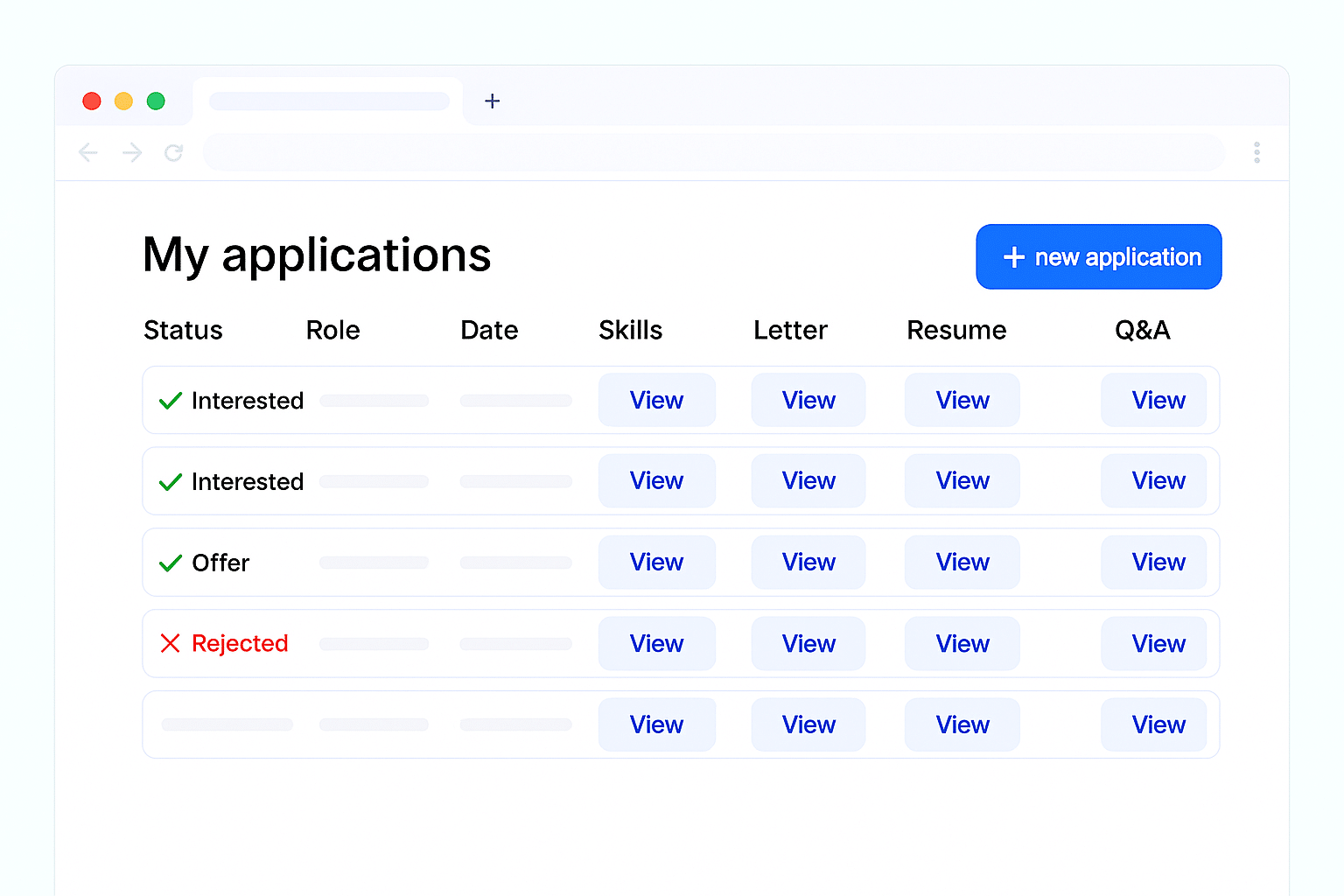
Getting started with an AI interview prep tool, like the one we've built into JobWinner, is surprisingly simple. The whole point is to turn a pile of information—your resume, the job description—into a focused, personalized practice session.
Here’s a quick rundown of how it usually works:
- Upload Your Docs: You'll start by feeding it your resume and the complete job description for the role you're after.
- Get Your Questions: The AI then gets to work, comparing the two documents to spit out a list of highly probable questions tailored to that specific company and position.
- Run a Mock Interview: Now for the fun part. You can kick off a simulated interview where the tool asks you the questions it created. You just record your answers.
- Get Instant Feedback: Once you're done, you get a full breakdown of your performance. The feedback can cover the substance of your answers, your speaking pace, and whether you're hitting the right keywords.
This feedback cycle is where the magic happens. It helps you pinpoint weak spots you'd never notice on your own, turning a good answer into a truly great one.
Making Your AI Coach Work for You
To get the absolute most out of your AI-powered prep, you need to be smart about it. The quality of what you put in directly impacts the quality of what you get out.
For anyone who wants to get better at prompting an AI, digging into a Clear Prompt Framework to Get Better ChatGPT Answers can make a huge difference in your results. The better your prompts, the more insightful and personalized the AI's feedback will be.
Think of AI not as a replacement for preparation, but as a powerful accelerator. It makes your practice sessions smarter, faster, and more focused on what will actually matter during the real interview.
At the end of the day, this technology is all about making your efforts count. It takes the guesswork out of the equation and lets you focus on what really matters: telling your story with confidence and clarity. For more on this, you can also check out our guide on how to prepare for an interview with AI.
Mastering the Final Steps and Follow-Up
The interview isn’t really over when you walk out the door. Those last few minutes and, just as importantly, what you do afterward can make or break your chances. This is your final opportunity to prove you’re not just another qualified candidate, but someone who is genuinely invested and professional.

Think of this part as your turn to interview them. The questions you ask are a huge indicator of your interest and how you think. They show you’re not just looking for a paycheck, but for the right place to build your career.
Asking Questions That Matter
Your questions say a lot about you. They reveal what you care about and whether you’ve truly pictured yourself in the role. I’ve always found it helps to have a few questions up your sleeve, tailored to the person you're speaking with.
For instance, asking a future colleague about the nitty-gritty of a typical Tuesday is fantastic. But that same question would fall flat with a C-level executive. For them, you need to think bigger—about strategy, industry trends, and the company's long-term vision.
Here are some smart questions you can adapt for different interviewers:
| Interviewer Role | Sample Question | Why It Works |
|---|---|---|
| Hiring Manager | "Looking ahead, what's the biggest goal you'd want the person in this role to achieve in their first 90 days?" | This shows you're focused on results and ready to hit the ground running. |
| Potential Teammate | "What's your favorite part about how this team works together on a tough project?" | It highlights your commitment to collaboration and understanding team culture. |
| HR/Recruiter | "Could you share a recent example of how the company lived up to one of its core values?" | This gets beyond the usual buzzwords and asks for a real story about their work environment. |
The point isn't to put them on the spot. It's to open up a real conversation about where the company is headed and how you can be a part of that journey.
The Art of the Follow-Up Email
A prompt and thoughtful thank-you email is not optional. It’s a must. While nearly 90% of hiring managers say they appreciate these emails, it’s shocking how many candidates just don’t bother. This simple act immediately sets you apart.
A great follow-up email has a few key ingredients:
- Be quick about it. Send your email within 24 hours. Any later, and you risk fading into the background.
- Make it personal. Don't just send a generic template. Mention something specific you talked about—maybe you connected over a recent project or a shared interest in a new technology.
- Connect the dots. Briefly, in a sentence or two, remind them how your best skills directly solve a problem or meet a need you discussed.
- Keep it short and sweet. Hiring managers are swamped. A few concise, powerful paragraphs will always beat a long, rambling message.
This isn’t just about being polite; it’s a strategic move. It shows you’re organized, thoughtful, and truly serious about the role, reinforcing all the hard work you put into the interview itself.
Answering Your Top Interview Prep Questions
As you start prepping for an interview, a few common questions always seem to surface. Are you putting in enough time? What happens if you get completely stumped by a question? It's completely normal to have these thoughts race through your mind.
Let’s tackle these head-on. Getting a handle on these "what-ifs" can do wonders for your confidence and help you walk into that interview feeling ready for anything.
How Long Should I Actually Spend Prepping For An Interview?
For most roles, a good rule of thumb is to dedicate 5 to 10 hours to solid, focused preparation. This isn't about rote memorization; it's about smart, strategic practice that genuinely prepares you for the conversation ahead.
The best way to do this without getting overwhelmed is to break it down. Here’s a realistic way to split up your time:
- Company Deep Dive (2-3 hours): Don't just skim their "About Us" page. Look up recent press releases, check out the interviewer's LinkedIn profile, and get a real feel for their biggest challenges and recent wins.
- Storytelling Practice (3-4 hours): This is where you prepare your greatest hits. Pinpoint specific examples from your past experience that align with the job description and practice telling them using the STAR method. Know the key beats of each story inside and out.
- Run-Throughs (1-2 hours): Practice saying your answers out loud. Seriously. Grab a friend, a mentor, or use an AI tool to do a mock interview. You'll catch awkward phrasing and get your timing down.
- Question Prep (1 hour): Prepare a few insightful questions for them. This is your chance to show you’re thinking deeply about the role, the team, and the company's future.
If you're interviewing for a senior leadership or a highly technical position, you'll likely need to invest more time, a good 15+ hours wouldn't be unusual. But this framework is a fantastic starting point for almost any interview.
What Do I Do If I Just Don't Know The Answer?
First, don't panic. It happens to literally everyone, and a good interviewer knows that. Whatever you do, don't try to bluff your way through it. It's almost always obvious and can seriously hurt your credibility.
Instead, take a deep breath. A moment of silence is perfectly fine. Use it as an opportunity to showcase your thought process and problem-solving skills.
The strongest response is one that shows how you think. Try saying something like, "That's an interesting question. I haven't encountered that exact scenario before, but here's how I would begin to tackle it…" Then, talk through the steps you'd take. This highlights your critical thinking, which is often what they're truly looking for.
Is It Okay To Bring Notes Into The Interview?
Yes, absolutely. In fact, it can make you look even more prepared. Showing up with a small, professional notebook and a pen signals that you're organized, engaged, and serious about the opportunity.
It's the perfect place to jot down the questions you've prepared or key statistics you want to remember.
Pro-Tip: Your notebook isn't just for you. Use it to jot down a quick note when the interviewer is talking about something important. It shows you're actively listening and engaged.
The key is to use them as a reference, not a crutch. Glancing down at your notes to recall a specific number or a question is perfectly professional. Reading your answers word-for-word, however, comes across as robotic and unprepared. Your notes should be a safety net, not a script.
Ready to take the guesswork out of your interview prep? JobWinner uses AI to generate likely interview questions based on your resume and the job description, helping you practice with confidence and walk in prepared. Start your free trial today.