 EN
EN  ES
ES  IT
IT  FR
FR 
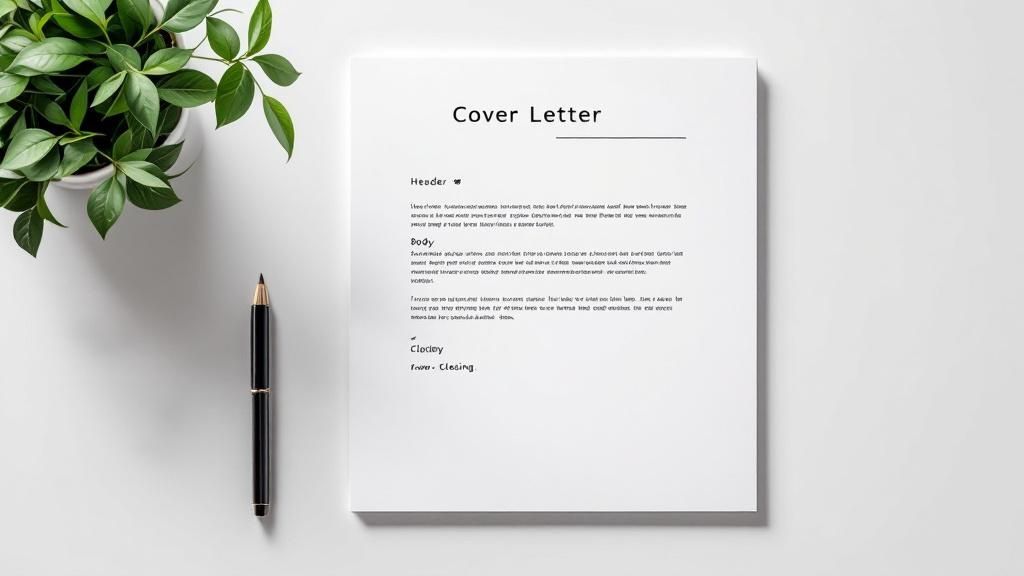
Learning how to write a cover letter that actually gets you noticed boils down to three things: a hook in the opening, body paragraphs that prove you're the right person for the job, and a confident closing that pushes for the next step. Think of it as your chance to build a bridge between the sterile facts on your resume and the real, live person reading your application. It’s where your personality gets to shine.
Why Bother With a Cover Letter Anymore?
Let's be real—writing a cover letter can feel like a chore. With all the one-click "easy apply" buttons out there, it’s tempting to ask if anyone even reads them. But here’s the thing: that’s exactly why it’s the most powerful, underused tool in your job search toolbox. A great cover letter is your first real opportunity to show some personality and connect with a human on the other side.
Your resume handles the what and the where of your career history. Your cover letter is all about the why. It’s your space to answer the questions your resume can't:
- Why are you genuinely excited about this company?
- Why are your skills the perfect solution for this specific role?
- What makes you a great fit for their team culture?
It's your secret weapon for getting out of the massive application pile and into the "must-interview" shortlist.
The Numbers Speak for Themselves
A lot of job seekers treat the cover letter as optional. That’s a huge missed opportunity. As of 2025, an overwhelming 83% of hiring managers consistently read cover letters when they're included. Even more telling, 94% of hiring managers say that cover letters influence their interview decisions, with a solid 25% calling them 'very important.' If you want to dive deeper, you can explore more cover letter statistics and see just how much of a difference they make.
Editor's Tip: A truly effective cover letter bridges the gap between your resume and the company's needs. It's not just about listing skills; it's about building a compelling case for why you are the solution to their problem.
The Power of a Personal Touch
Sending a generic, copy-and-pasted letter is almost as bad as sending nothing. Recruiters can spot them a mile away, and it screams "I don't really care about this job." The real magic happens when you show you’ve done your homework.
This infographic lays out just how much a little extra effort pays off.
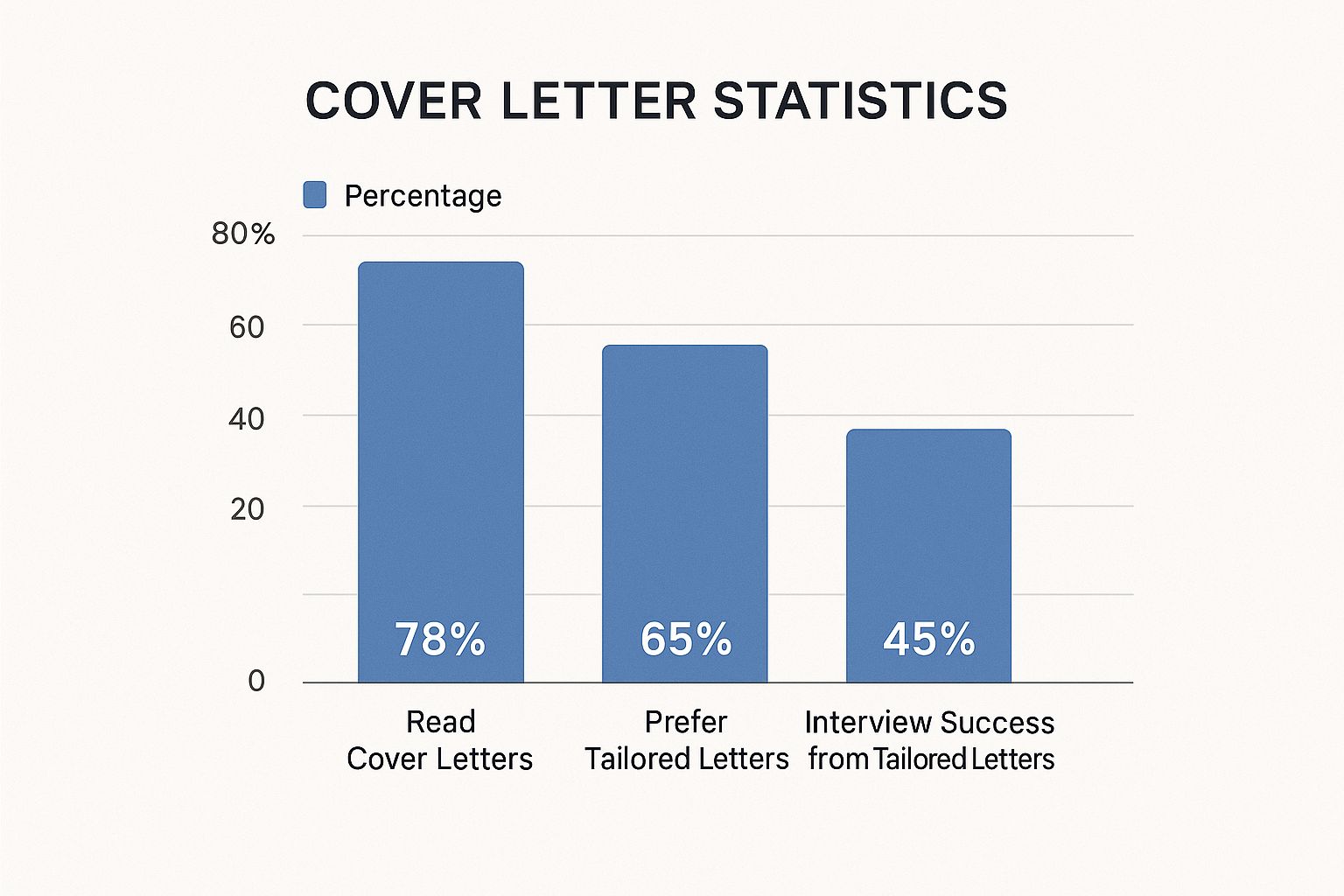
As you can see, a huge majority of recruiters not only read cover letters but actively prefer the ones written specifically for their role. That effort directly translates into a much higher chance of scoring an interview.
To make sure your cover letter is a winner, it helps to see what works and what doesn't. This quick comparison breaks down the key differences.
Winning vs. Losing Cover Letter Elements
| Component | What Works (The Winner) ✅ | What Fails (The Loser) ❌ |
|---|---|---|
| Opening | Hooks the reader with a key achievement or unique connection to the company. | Uses a generic "I am writing to apply for…" statement. |
| Body | Provides specific examples that match the job description's top requirements. | Vaguely rehashes the resume without adding new context or value. |
| Tone | Sounds professional yet authentic, showing genuine enthusiasm for the role. | Is overly formal, robotic, or contains clichéd business jargon. |
| Closing | Ends with a confident call to action, suggesting the next step (e.g., an interview). | Finishes passively, hoping the recruiter will reach out. |
In short, a winning cover letter is strategic, specific, and full of personality. A losing one is lazy and reads like a form letter. Which one do you think gets the call?
Decode the Job Description Like a Pro
Before a single word hits the page, your first task is to become a detective. The job description isn't just a list of duties; it's a blueprint of the company's problems and the perfect solution they're hoping to find. A truly great cover letter shows you've read that blueprint and are ready to get to work.
So many people just skim the requirements, and that’s a huge missed opportunity. My advice? Print it out or pull it into a separate document. Go through it once for a general feel, then go back with a virtual highlighter. This time, you're hunting for keywords, phrases that pop up more than once, and any company-specific language. If "cross-functional collaboration" is mentioned three times, you can bet that’s a big part of their culture.
Pinpoint the Top Priorities
Your real goal here is to isolate the 3-4 non-negotiable requirements for the job. These are the skills or experiences that will make or break your application from the hiring manager's perspective. They’re often listed first, repeated for emphasis, or described with the most detail. These are the pain points you were hired to solve.
Editor's Tip: When you focus on the top 3-4 priorities, you’re sending a clear signal: "I get it. I understand what matters most, and I'm the person who can deliver on it." You immediately shift from being just another applicant to being a direct solution.
Once you've identified them, you have the pillars for your entire cover letter. Let's say a Marketing Manager role is screaming for someone who can handle "driving lead generation," "managing a $50k budget," and "leading a small team." Boom. You now have the three core themes for your body paragraphs.
The Pre-Writing Research Checklist
A little bit of homework goes a long way in setting you apart. It shows you're not just carpet-bombing applications but are genuinely interested in this specific role at this specific company.
- Find the Hiring Manager: Hop on LinkedIn and do a quick search for the head of the department. An opener like "Dear [First and Last Name]" is miles more effective than the generic "To Whom It May Concern." It shows initiative right from the start.
- Mirror Their Language: Pay attention to the tone. Is the job description buttoned-up and corporate, or is it laid-back and full of energy? Adopting a similar tone in your writing creates an instant sense of cultural fit.
- Check Recent Company News: A quick Google search can uncover a recent product launch, a big award, or a new initiative. Dropping this into your letter shows you're engaged. Something as simple as, “I was particularly impressed by your recent launch of the new eco-friendly product line…” creates a powerful, personal connection.
Building a Compelling Cover Letter Structure
A great story needs a solid frame, and your cover letter is no different. Think of it as a three-act play: a captivating opening that grabs attention, a compelling middle that builds your case, and a powerful closing that leaves a lasting impression. Without this structure, even your best qualifications can get lost in the shuffle.
The goal isn't just to repeat your resume—it's to build a persuasive argument for why you are the perfect person for this specific job. A well-organized letter guides the hiring manager through your logic, making it easy for them to connect the dots between their needs and your experience.
Crafting a Magnetic Opening
Your opening paragraph is your one shot to make a great first impression. Generic lines like, "I am writing to apply for…" are the fastest way to get your letter tossed aside. You need to hook the reader immediately with something that shows both your value and your genuine enthusiasm.
This first interaction is absolutely critical. According to data from ResumeGenius.com, a staggering 41% of hiring managers believe the introduction heavily influences their overall impression. In fact, 45% of them admit to rejecting candidates based solely on a weak cover letter, which really highlights how much a polished opening matters.
Here’s how to nail it:
- Lead with an Achievement: Start with a quantifiable win that’s directly relevant to the role.
Example: "In my previous role, I grew social media engagement by 150% in six months by launching a new data-driven content strategy."
- Show Genuine Passion: Mention something specific about the company that excites you—a recent project, a core value, or even a news feature.
Example: "As a long-time admirer of [Company Name]'s commitment to sustainability, I was thrilled to see the opening for a Project Manager to lead your new green initiatives."
Building Your Case in the Body Paragraphs
The body of your letter is where you connect your skills directly to the company's pain points. This is your chance to move beyond the bullet points on your resume and tell a story about your accomplishments. I recommend focusing on one or two paragraphs that tackle the top requirements you pulled from the job description.
Editor's Tip: Don't just list your skills; demonstrate them. Instead of saying, "I have strong project management skills," describe a specific project you managed, the challenge you overcame, and the successful outcome you delivered.
A fantastic way to do this without creating a wall of text is to use a "highlight reel"—a short, 2-3 bullet point list that showcases your biggest wins. This breaks up the page and makes your key qualifications easy to scan.
Example Highlight Reel for a Marketing Role:
- Led a campaign that generated over $500,000 in new revenue, beating our targets by 25%.
- Grew our email subscriber list from 10,000 to 50,000 in just one year.
- Slashed our cost-per-acquisition by 18% through rigorous A/B testing and ad optimization.
This method gives the hiring manager concrete proof of what you can do. For a deeper dive into making every word count, our guide on tailoring your cover letter effectively is a great resource.
Sealing the Deal with a Confident Closing
Your final paragraph needs to be confident, clear, and action-oriented. You’ve made your case; now it’s time to propose the next step. Avoid ending passively with a phrase like "I look forward to hearing from you."
Instead, take charge. Reiterate your excitement for the opportunity and directly suggest an interview to discuss how your skills will benefit the company.
Example Closing Paragraph:
"I am confident that my experience in driving user acquisition and my passion for your company's mission would allow me to make a significant contribution to your team. I am eager to discuss how my strategies can help you achieve your goals in an interview. Thank you for your time and consideration."
Finally, close it out with a professional sign-off.
Professional Sign-Offs
| Use These 👍 | Avoid These 👎 |
|---|---|
| Sincerely | Cheers |
| Best regards | Love |
| Kind regards | Yours truly |
| Thank you | No sign-off |
Master the Art of Personalization and Tone
Here’s a simple test: if you could send your cover letter to ten different companies just by changing the name, it's not working. A generic letter is a completely wasted opportunity. This is where you can truly set yourself apart, moving from just another applicant to a candidate they absolutely have to meet.
Real personalization is so much more than slotting in the company's name. It’s about proving you've done your homework and have a specific, genuine interest. Mentioning a recent project launch, a company value that resonates with you, or a news article you saw about them creates an immediate connection. This small effort shows you aren't just looking for any job—you want this job.
The difference this makes is staggering. Think about it: about 41% of hiring managers have hired someone based on their cover letter alone. On the flip side, 45% of recruiters admit to rejecting qualified candidates simply because of a bad one. These numbers, which you can explore in more detail through these resume statistics for job seekers, show just how high the stakes are.
Finding Your Voice
Just as crucial as what you say is how you say it. Your tone is everything. The sweet spot is sounding professional yet human, confident but not arrogant. Nailing this balance is what makes your cover letter feel authentic.
Start by getting a feel for the company's culture. A cover letter for a buttoned-up law firm will have a very different vibe than one for a scrappy tech startup. The job description and the company’s website are goldmines of information. Pay close attention to the language they use and mirror it in your writing.
Editor's Tip: Your tone is your personality on paper. It's what makes the hiring manager feel like they're meeting a person, not just reading a document. Striking the right chord can make you instantly more relatable and memorable.
Matching Your Tone to the Industry
Let's break this down with a real-world example. A subtle shift in how you phrase your skills can make all the difference in proving you’ll fit right in.
Here’s how you might describe the same skill for two very different environments:
| Skill | Formal Corporate Tone (e.g., Law Firm) | Casual Startup Tone (e.g., Tech Company) |
|---|---|---|
| Project Management | "I successfully managed cross-functional teams to deliver complex projects on schedule and within budget, ensuring all stakeholder expectations were met." | "I love getting my hands dirty and rallying the team to get projects across the finish line, even when things get scrappy. We hit our goals and had fun doing it." |
| Data Analysis | "My analytical skills enabled me to interpret large datasets, identify key trends, and provide actionable insights that informed strategic business decisions." | "I'm a data geek who enjoys digging into the numbers to figure out what’s working. I turned our user data into a clear plan that boosted our conversion rates." |
See the difference? The core skill is identical, but the delivery is completely tailored to the audience. This is how you show you get them.
Don't Be Afraid to Be Yourself
Finally, let a little of your personality come through. This is your chance to connect. If you’re genuinely fired up about the company’s mission, say so. If one of their products inspired you or solved a problem for you, share that story—briefly, of course.
This isn’t about being unprofessional. It’s about finding those small moments to connect on a human level. A touch of authentic enthusiasm can be the very thing that makes your cover letter memorable and convinces a hiring manager you're the person they’ve been looking for.
Putting on the Final Polish and Dodging Common Mistakes
You've done the heavy lifting and have a solid draft in front of you. Great. But now it’s time to take it from good to truly impressive. This last pass is all about quality control, catching those tiny mistakes that can, unfortunately, have a huge impact.
This isn’t just about a quick spell-check. It's about showing you’re a professional who cares about the details. A single typo can signal carelessness to a hiring manager, and that's a red flag you can't afford.
Here’s a trick I swear by: read your cover letter out loud. It sounds simple, but it forces you to slow down. You'll immediately hear awkward phrasing, run-on sentences, and typos your eyes might have skipped right over.
The Most Common—and Costly—Mistakes
I’ve seen fantastic candidates get passed over because of simple, avoidable errors. These aren't just minor slip-ups; they send a message to the recruiter, and it's not the one you want. Knowing what they are is half the battle.
Keep an eye out for these frequent blunders:
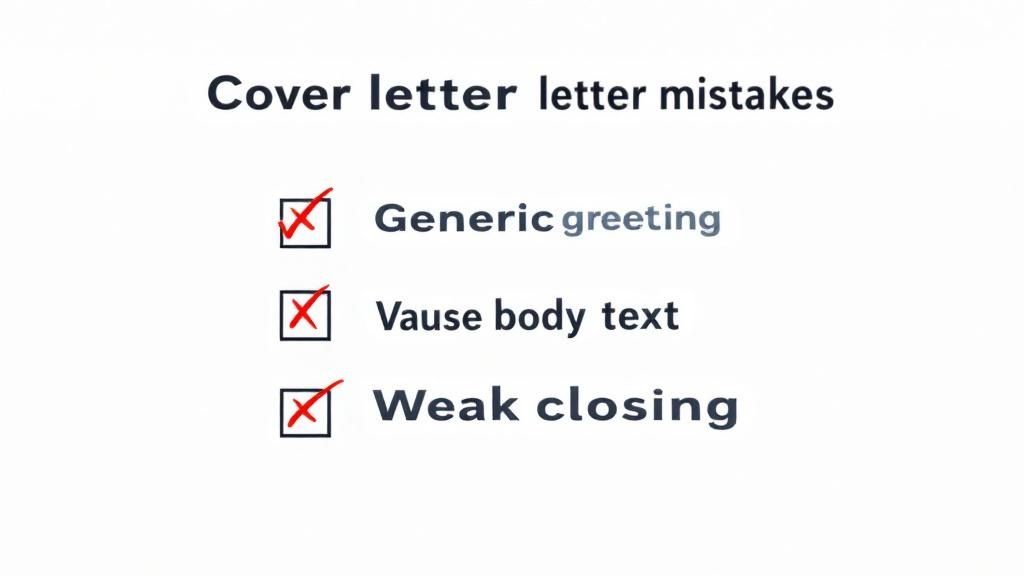
- Relying on Tired Clichés: Phrases like "I'm a team player" or "I think outside the box" have lost all meaning. They're just noise. Instead, prove these qualities with a quick story or a specific achievement.
- Forgetting to Swap the Details: This one is an instant deal-breaker. Sending a cover letter addressed to "ABC Corp" when you're applying to "XYZ Inc." shows you're just firing off resumes without a second thought. Double-check the company name and job title every single time.
- Making It All About "I": Your cover letter shouldn’t read like a diary of what you want. It needs to be about them. Frame your skills and accomplishments as solutions to their problems and needs.
Editor's Tip: Think of it this way: your cover letter is the final handshake before you (hopefully) meet in person. A clean, error-free document shows you respect the hiring manager's time and reflects the same care and professionalism you’d bring to the job.
Formatting and File Best Practices
The final presentation of your document really does matter. Clunky formatting can make your letter a chore to read, and the wrong file type might not even open on the recruiter’s computer.
Stick to these simple rules for a professional submission:
| Element | Best Practice | Why It Matters |
|---|---|---|
| Font Choice | Use a clean, standard font like Calibri, Arial, or Georgia in a readable size (10-12pt). | It keeps your letter looking sharp and ensures it's easy to read on any device. |
| File Format | Always save and send your cover letter as a PDF. | This is non-negotiable. It locks in your formatting so it looks perfect everywhere and prevents any accidental changes. |
| File Name | Name your file something clear, like "FirstName-LastName-Cover-Letter.pdf". | This small detail makes life easier for the recruiter, helping them keep your application organized. |
Nailing these final touches ensures all your hard work pays off. And when that perfected cover letter lands you the interview, our guide on preparing for the interview can help you get ready for the next step.
Your Common Cover Letter Questions Answered
Even with a solid game plan, a few tricky questions always seem to pop up when you're in the middle of writing a cover letter. It’s these little details that often make the biggest difference, turning a decent application into a truly memorable one.
Let’s clear up some of the most common uncertainties job seekers have. My goal here is to give you clear, confident answers so you can hit "send" without any second-guessing.
How Long Should a Cover Letter Be?
Keep it concise. The ideal length for a modern cover letter is between 250 and 400 words. This range is the sweet spot—long enough to be compelling, but short enough to fit cleanly on a single page and respect a recruiter’s time.
Think of it this way:
- A punchy intro: One short paragraph to grab their attention.
- One or two body paragraphs: This is your prime real estate to connect your best skills and experiences to the job’s core needs.
- A confident closing: A final paragraph to wrap things up and clearly state your interest in the next step.
Editor's Tip: Spilling onto a second page is a classic mistake. It can inadvertently signal to a busy hiring manager that you have trouble summarizing information. Stay focused, stay powerful, and stay on one page.
What if I Cannot Find the Hiring Manager's Name?
First off, always try to find it. A quick search on LinkedIn or the company's "About Us" page is well worth the effort. Addressing your letter to a specific person is the gold standard.
But sometimes, the name is simply nowhere to be found. If you've done your due diligence and come up empty, don't fall back on the stuffy, outdated "To Whom It May Concern."
Instead, a modern, targeted greeting shows you put in the effort.
| Best Alternatives | Why They Work |
|---|---|
| "Dear Hiring Manager" | Simple, direct, and universally understood. It’s a safe and professional bet. |
| "Dear [Department] Team" | Great for showing you know exactly where the role fits within the company (e.g., "Dear Marketing Team"). |
| "Dear [Job Title] Search Committee" | The perfect choice for academic, non-profit, or committee-led hiring. |
Should I Use an AI Tool to Write My Cover Letter?
AI can be an incredible co-pilot for writing your cover letter, but you should never let it take the wheel completely. Think of AI tools as a brilliant assistant, not the author. They're fantastic for brainstorming ideas, catching pesky grammar mistakes, or helping you rephrase a clunky sentence.
The danger? A letter written entirely by AI often sounds hollow. It lacks the personal stories, genuine passion, and specific anecdotes that make you the right person for the job. Recruiters are getting savvier every day and can often spot generic, robotic text from a mile away.
Here’s the pro-level approach:
- You write the first draft. Get your own voice, personality, and experiences down on paper first.
- Use AI to polish and refine. Let the technology help you sharpen your message and improve clarity.
Should I Write a Cover Letter if It Is Optional?
Yes. Always yes. When you see a cover letter listed as "optional," you should translate that in your head to "highly recommended for serious candidates."
This is your golden ticket to stand out from the sea of applicants who took the path of least resistance. Submitting a thoughtful cover letter shows initiative and proves your interest is genuine. It’s an extra chance to tell the story that your resume simply can't. If you want more inspiration, you can find a wealth of resources in our guide to writing the perfect cover letter.
Ready to apply for jobs faster and with more confidence? JobWinner is an AI-powered platform that helps you create tailored resumes and cover letters in minutes. It optimizes your applications for ATS, analyzes your job match, and even helps you prepare for interviews. Stop wasting time and start landing more interviews. Get started with JobWinner today.
Article created using Outrank