 FR
FR  EN
EN  ES
ES  IT
IT 
Stepping into the job market for the first time can feel like you're being asked to show a driver's license when you've never been behind the wheel. How do you write a resume with no 'real' experience? Don't worry, the secret is realizing you have more valuable experience than you think. From class projects and volunteer work to part-time gigs and club leadership, your journey so far is packed with skills that employers are looking for.
The real challenge isn't a lack of experience; it's learning how to frame what you've done in a way that catches a hiring manager's eye. That's exactly what this guide is for. We'll walk you through multiple student resume examples for first job scenarios, showing you how to turn your academic and extracurricular life into a professional story that gets you noticed.
Instead of just showing you finished resumes, we're going to dissect each one to reveal the strategy behind it. You'll learn:
- How to structure your resume when you have limited professional history.
- What skills to highlight from your classes, projects, and volunteer activities.
- Specific phrases that will grab a recruiter's attention and get past those tricky automated screening systems (ATS).
Think of this as your personal playbook. We’ll give you clear, annotated examples and formatting tips to demystify the process. Let's work together to turn that blank page into a compelling resume that opens the door to your first job offer.
1. Chronological Resume for Entry-Level Retail/Customer Service
The chronological resume is the most traditional and widely recognized format, making it a fantastic starting point for students looking for their first job. It lists your experience in reverse chronological order—starting with the most recent—and is a huge favorite among hiring managers in fast-paced fields like retail and customer service. Why? Because it lets them quickly see your most current skills.
Here's the good news: for a student, "experience" doesn't just mean a formal, paid job. It can be that summer job you had, volunteer work you did, or even significant responsibilities you held in a school club. The goal is to show you're reliable and have been growing your skills, even over a short time. This format is a great way to build one of the strongest student resume examples for a first job because it’s so easy for employers to scan and understand.
Strategic Breakdown: Why This Format Works
The power of the chronological format is in its clarity. It tells a simple, linear story that proves you can hold a position and shows a timeline of your growing responsibilities.
- Emphasizes Growth: Listing your most recent role first immediately shows what you've been doing lately. If you were promoted or given more duties (e.g., from trainee to cashier), this format makes that progression clear.
- ATS-Friendly: Applicant Tracking Systems (ATS), the software that first screens your resume, love this format. Its predictable structure ensures your dates, job titles, and duties are read correctly.
- Meets Employer Expectations: Recruiters are used to this layout. It allows them to find what they need without any guesswork, a major plus when they're sorting through hundreds of applications.
Conseils pratiques pour votre CV
To make your chronological resume pop, focus on adding numbers to your achievements and highlighting transferable skills.
Point clé : Even in your first job, you have metrics! Instead of saying "handled cash," try this: "Managed cash register and processed over $500 in daily transactions with 100% accuracy." This small change adds a ton of professional weight.
Here are a few quick tips to get you started:
- Utilisez des verbes d'action : Start each bullet point with a strong verb. Think "Assisted," "Operated," "Resolved," or "Organized."
- Quantifiez votre impact : Numbers are your best friend. Mention how many customers you served per hour, the percentage you helped increase sales by, or the size of the team you worked with.
- Match Keywords: Take a close look at the job description. If it mentions "inventory management" or "point-of-sale systems," make sure you include those exact phrases in your experience section if you've done them.
This format provides a solid foundation. To explore its structure in greater detail, you can read more about the benefits of a reverse chronological order resume.
2. Functional Resume Emphasizing Skills Over Experience
When your work history is a bit light, the functional resume format is your secret weapon. It shifts the focus from où you've worked to ce que vous pouvez faire. This skills-based approach is incredibly powerful for students because it highlights your capabilities first, making it a great choice if you lack formal job titles but have relevant skills from school projects, volunteering, or clubs.
Instead of a timeline of jobs, this format groups your qualifications into skill categories like "Communication," "Project Management," or "Technical Skills." This immediately shows a hiring manager that you have the specific talents they're looking for, even if you haven't held a traditional 9-to-5 role. This makes it a strong contender among student resume examples for a first job, especially when you're moving straight from school into the workforce.
Strategic Breakdown: Why This Format Works
The functional resume’s biggest strength is its ability to directly address an employer's needs by putting your best skills right at the top. It's perfect for students whose best qualifications come from different, non-work experiences.
- Spotlights Transferable Skills: It lets you pull from various life experiences (like leading the debate club or organizing a fundraiser) and present them as solid professional skills.
- Masks Gaps in Employment: For students with no formal work history, this format fills the page with valuable info about your abilities rather than leaving a sad, empty "Work Experience" section.
- Tailored to the Job: You can customize the skill categories to perfectly match the requirements in a job description, making it instantly clear to a recruiter that you're a great fit.
Conseils pratiques pour votre CV
To create an effective functional resume, you need to back up every skill with solid proof. Don't just list skills; give examples of how you've used them.
Point clé : A functional resume isn't just a list of buzzwords. Prove your "strong communication skills" by adding a bullet point like this: "Presented a semester-long research project to a 50-person lecture hall, receiving top marks for clarity and engagement."
Here are a few quick tips:
- Use Specific Skill Headings: Instead of a generic "Skills" heading, use targeted categories like "Leadership & Team Collaboration" or "Data Analysis & Reporting" that align with the job.
- Quantify Your Accomplishments: Add numbers to give your skills context. For example, under "Event Coordination," mention "Organized a charity bake sale that raised over $300 and attracted 100+ attendees."
- Include a Brief Work History: Even with a functional format, it's a good idea to include a small, simple work history section at the bottom. This helps with those Applicant Tracking Systems (ATS) and can list any part-time jobs, internships, or key volunteer roles with dates.
This format helps you demonstrate your value through your abilities, not just your job titles. To build a compelling skills section, you can get more ideas on the top compétences en rédaction de CV pour les étudiants.
3. Hybrid Resume Combining Skills and Experience
The hybrid resume, sometimes called a combination resume, is a modern format that powerfully blends the best of both worlds. It kicks off with a prominent skills section at the top, immediately showcasing your key abilities, and then follows up with a neat, chronological work history. This structure is a game-changer for students because it lets you lead with your strengths, even if your formal work experience is on the shorter side.
For a student applying for their first job, this format solves a common problem: how to prove you're qualified without a long list of previous employers. By putting your most relevant skills front and center, you grab the hiring manager's attention and show them you have what it takes. This makes it one of the most strategic student resume examples for a first job, as it lets you control the narrative and focus on your capability over your history.
Strategic Breakdown: Why This Format Works
The strength of the hybrid format is its flexibility and directness. It immediately answers the employer's number one question: "Does this candidate have the skills to do the job?"
- Highlights Transferable Skills: It lets you spotlight abilities like "Digital Communication" or "Leadership & Team Collaboration" gained from classes, projects, and volunteer work, making them just as important as paid experience.
- ATS-Friendly and Human-Readable: The format includes a dedicated skills section, which is great for loading up with keywords for Applicant Tracking Systems (ATS). At the same time, the chronological work history provides the familiar structure that recruiters expect and like.
- Downplays Lack of Experience: By leading with a strong skills summary, you draw attention away from a sparse work history section. The focus stays on what you can do, not just where you've been.
Conseils pratiques pour votre CV
To make a hybrid resume really work for you, be strategic about which skills you feature and how you connect them to your experiences.
Point clé : Your skills section should be a mirror of the job description. If the posting asks for "customer conflict resolution," use that exact phrase in your skills list (if you have that skill!) and then provide a quick example in your work history, like "Resolved customer complaints with a 95% satisfaction rate."
Here are a few quick tips to get you going:
- Curate Your Skills: Choose 4-6 of your most relevant skills for the top section. Don't list everything; focus on what the employer is looking for.
- Use Job Description Keywords: Scour the job posting for key requirements and mirror that language in your skills section. This is a crucial step to get past automated screening systems.
- Keep Experience Concise: Since your skills section is detailed, keep the descriptions under each job or activity to 2-3 powerful bullet points that reinforce those skills.
- Connect Skills to Experience: Make sure the abilities you list at the top are proven in the experience section below. For example, if you list "Inventory Management," a bullet point under your retail job should mention it.
4. Academic-Focused Resume for Recent High School Graduates
If you're a recent high school graduate with little to no formal work experience, the academic-focused resume is your best friend. This approach cleverly shifts the hiring manager's attention from a thin "Work Experience" section to a rich "Education" and "Extracurriculars" section. It's designed to spotlight your academic diligence, relevant coursework, and the leadership potential you've shown in school activities.
For students aiming for their first professional role—like an administrative assistant or an internship—this format proves you have discipline, specialized knowledge, and transferable skills. It reframes your academic career as your primary "job," making it a powerful foundation for one of the best student resume examples for a first job when paid experience is limited.
Strategic Breakdown: Why This Format Works
The power of an academic-focused resume is its ability to translate school achievements into professional qualifications. It tells a story of your dedication, intelligence, and the practical skills you've picked up through projects, clubs, and challenging classes.
- Highlights Transferable Skills: Roles like Debate Team Captain or Student Government Treasurer showcase leadership, public speaking, and budget management. These are valuable skills in any workplace.
- Showcases Strong Work Ethic: A high GPA (think 3.5 or above) and a list of AP or honors courses signal to employers that you're hardworking, intelligent, and can meet high standards.
- Fills Experience Gaps: Instead of leaving the experience section empty, you can fill your resume with academic projects, volunteer positions, and leadership roles that serve as credible proof of your abilities.
Conseils pratiques pour votre CV
To make your academic resume compelling, you have to explicitly connect your educational background to the job's requirements. Use numbers to back up your accomplishments and frame them in a professional way.
Point clé : Treat your significant school projects like professional assignments. Instead of just listing "History Day Project," describe it like this: "Researched, wrote, and presented an award-winning 25-page paper on economic policy, demonstrating advanced research and analytical skills."
Here are a few quick tips:
- Prioritize Education: Put your Education section right at the top of your resume, just after your contact info and summary.
- Quantify Club Achievements: Don't just list "Member of the fundraising committee." Be specific about your impact: "Co-organized a school-wide fundraising drive that collected over $5,000 for a local charity, exceeding our goal by 25%."
- List Relevant Coursework: If you’re applying for a business internship, make sure to include courses like AP Microeconomics, Accounting, or Introduction to Business. This shows you already have some foundational knowledge.
5. Portfolio-Integrated Resume for Creative First-Jobbers
For students stepping into creative fields like design, writing, or web development, a standard resume just doesn't cut it. A portfolio-integrated resume solves this by linking directly to real, tangible proof of your skills, letting employers see your work for themselves. This format is a powerful way for first-time job seekers to compete with more experienced candidates by showing what you can do, not just saying it.

Whether it's a graphic design student linking to their Behance profile or a budding writer showcasing their Medium blog, this approach makes your application interactive and proves your capabilities. Building one of the most effective student resume examples for a first job in a creative industry means showing, not just telling. Your portfolio is your ultimate evidence.
Strategic Breakdown: Why This Format Works
The strength of a portfolio-integrated resume is that it gives immediate, visual proof of your skills. It turns your application from a list of claims into a gallery of your actual accomplishments.
- Demonstrates Practical Skills: A link to your GitHub profile or design portfolio instantly validates the technical and creative skills you've listed. It’s one thing to say you know Adobe Illustrator; it’s another to show off a stunning logo you designed with it.
- Se démarque de la foule : Recruiters in creative roles attendre to see a portfolio. Including it directly in your resume makes their job easier and shows you understand the industry's norms.
- Shows Passion and Initiative: A well-curated portfolio of your personal or academic projects shows you have a genuine interest in your craft that goes way beyond just your coursework.
Conseils pratiques pour votre CV
To make your portfolio-integrated resume work, make sure your links are prominent and that the portfolio itself is polished and professional.
Point clé : Your portfolio is an extension of your resume, not a replacement. Put clear links in your contact section and think about adding a dedicated "Projects" or "Portfolio" section with brief descriptions and direct links to your 3-5 best pieces of work.
Here are some quick, practical tips:
- Use Clean, Professional Links: If your portfolio links are long or messy, use a URL shortener like Bitly. For physical resumes, add a QR code that sends hiring managers directly to your work with their phone.
- Curate for the Job: Tailor the projects you highlight to match the specific role. If you're applying for a UX design job, feature your UX case studies, not your photography collection.
- Test Everything: Before you hit "send," double-check that all your links are active and go to the right page. A broken link looks unprofessional and can be a deal-breaker.
For more guidance on what to include in your portfolio, check out the video below.
6. Project-Based Resume Highlighting Coursework and Capstones
For students in technical or specialized fields, a project-based resume is a fantastic way to bridge the gap between academic theory and real-world application. This format moves the focus away from traditional jobs and onto your significant academic projects, capstone work, and relevant coursework. It essentially transforms your classroom wins into a portfolio of demonstrable skills—perfect for when you don't have a lot of formal job history.
This approach lets you present solid evidence of your abilities. For example:
- Un engineering student can detail a capstone bridge design project.
- UN computer science major can showcase a machine learning model they built.
- UN business student can feature a detailed market analysis they completed.
This is one of the most effective student resume examples for a first job when your most impressive work has happened in the classroom, not the workplace.
Strategic Breakdown: Why This Format Works
The real strength of a project-based resume is its power to showcase practical skills and problem-solving abilities directly. It tells a hiring manager not just what you've learned, but what you can actually faire with that knowledge.
- Translates Academics into Experience: It frames your capstone or major class project as quasi-professional work, complete with goals, methods, and outcomes. This is especially useful for fields like engineering, computer science, and business analytics.
- Highlights Technical Proficiency: This format gives you a dedicated space to list the specific tools, software, and technologies you used for each project (e.g., Python, CAD, MATLAB, SPSS). This immediately signals your technical qualifications.
- Demonstrates Real-World Application: By explaining the goal and results of your project, you show employers that you can think critically and apply your skills to solve concrete problems—a highly sought-after skill in any entry-level candidate.
Conseils pratiques pour votre CV
To create a compelling project-based section, treat each project like a mini-job entry. Detail your role, the challenge, and the results with precision.
Point clé : Don't just list the project title. Describe the problem you solved or the goal you met. Instead of "Machine Learning Project," write: "Developed a predictive model using Python and Scikit-learn to forecast customer churn with 92% accuracy, presenting a potential cost-saving strategy."
Here are a few quick tips:
- Create a Dedicated "Projects" Section: Place this section prominently, either right after your education or in place of a "Work Experience" section if you don't have any formal jobs.
- Quantify Your Results: Use numbers to prove your impact. Mention the accuracy of your model, the efficiency gains you calculated, or the financial impact of your strategic recommendations.
- Lien vers votre travail : If you can, include a link to a GitHub repository, a live demo, or detailed project documentation. This gives undeniable proof of your work.
- Conformément à la description du poste : Pick 2-4 of your most relevant projects. Customize their descriptions to include keywords and required skills from the job posting, like "data analysis," "structural integrity," or "strategic planning."
7. Volunteer and Internship-Focused Resume for Career Starters
For many students, the most meaningful and skill-building experiences come from roles that weren't paid. This resume format is designed for career starters whose main experience comes from volunteer work, internships, or unpaid positions. It works by giving this experience the same professional weight as a paid job, which is a game-changer for candidates building a resume from community work and learning opportunities.

Whether you tutored other students, cared for animals at a local shelter, or helped organize a community cleanup, you were developing real skills. Presenting these roles correctly makes this one of the most effective student resume examples for a first job, as it showcases your initiative and practical abilities even without a formal W-2 history.
Strategic Breakdown: Why This Format Works
The strength of this format is its ability to turn your passion and commitment into professional value. It reframes unpaid work as relevant job experience, directly tackling a common hurdle for many first-time job seekers.
- Demonstrates Initiative and Values: Choosing to volunteer or take an internship shows you're proactive and committed. Employers see this as a strong sign of great character and work ethic.
- Highlights Transferable Skills: Experience like coordinating a fundraising event or managing a small team of volunteers directly translates to project management and leadership skills that are valuable in any professional setting.
- Builds a Narrative of Purpose: This format tells a story about who you are and what motivates you. A recent graduate with a non-profit internship and volunteer fundraising experience has a compelling story for an entry-level community role.
Conseils pratiques pour votre CV
To make your volunteer and internship experience shine, present it with professional language and a focus on measurable results. Treat each role as a real job.
Point clé : Don't just list your duties; showcase your impact. Instead of "Helped with a fundraiser," write: "Coordinated 5 fundraising events that raised over $10,000 for community programs." This transforms a passive task into a quantifiable achievement.
Here are a few quick tips to make your experience count:
- Use Professional Titles: Instead of just "Volunteer," use specific titles like "Community Tutor," "Marketing Intern," or "Event-Planning Assistant."
- Quantifiez tout ce qui est possible : Mention the number of hours you committed per week, the number of people you trained, or the amount of money you helped raise.
- Show Progression: If you took on more responsibility over time, highlight it. For example: "Promoted from Shelter Assistant to Lead Volunteer, responsible for training 3 new team members."
- Frame with Strong Bullet Points: Use powerful action verbs to describe what you accomplished. You can find excellent examples for crafting compelling resume descriptions by reviewing guides on how to write effective bullet points.
8. Skills-First Resume with Soft Skills Emphasis for Service Industry First Jobs
When you have limited or no formal work experience, a skills-first resume is your best bet. This approach, also known as a functional resume, flips the traditional script by putting your abilities front and center, rather than a chronological work history. It’s perfect for students aiming for their first job in the service industry, where employers often care more about your potential to be a great team player than your past job titles.
This format immediately shows a hiring manager that you have the core skills needed for roles in retail, hospitality, or food service. By highlighting soft skills like communication, teamwork, and reliability, you prove you're ready for a customer-facing environment. This method makes for one of the most effective student resume examples for a first job because it directly answers the employer's main question: "Can this person do the job well, even without prior experience?"
Strategic Breakdown: Why This Format Works
The skills-first resume tells your story through your capabilities, not your timeline. For a student, this is a powerful way to frame your value when a work history section would otherwise be sparse.
- Highlights Transferable Skills: It allows you to draw connections between your experiences in school, volunteering, or clubs and the demands of the job. A group project becomes "Collaboration," and a class presentation becomes "Public Speaking."
- Addresses Employer Needs Directly: Service industry managers look for specific traits. By leading with skills like "Customer Service Focus" or "Ability to Thrive in a Fast-Paced Environment," you immediately signal that you understand the role and are a good fit.
- Minimizes Lack of Experience: This format strategically pushes the absence of a formal work history into the background. Instead of drawing attention to a blank section, it fills the page with compelling evidence of your abilities.
Conseils pratiques pour votre CV
To create a winning skills-first resume, you need to connect each skill to a real-life example. It’s not enough to just list "Team Player"; you have to show it.
Point clé : Prove your soft skills with hard evidence. For "Reliability," don't just state it. Write: "Achieved a 98% attendance record for all team practices and school commitments over two years, demonstrating exceptional dependability."
Here are a few quick tips to get you started:
- Lead with a Skills Summary: Start your resume with a "Summary of Skills" section that lists 4-5 key soft and hard skills. Tailor this list to match the keywords in the job description.
- Use a "Relevant Experience" or "Projects" Section: Instead of "Work Experience," create a section where you can group examples that support your skills. Under each skill, provide a bullet point from a school project, club role, or volunteer position.
- Quantify Your Contributions: Even without a paid job, you can use numbers! Mention leading a fundraising team that "exceeded its goal by 20%" or being part of a group project that "earned a 95% grade."
8 Student Resume Types Compared
| Format | Complexité de la mise en œuvre | Besoins en ressources | Résultats attendus | Cas d'utilisation idéaux | Principaux avantages |
|---|---|---|---|---|---|
| Chronological Resume (Entry-Level Retail/Customer Service) | Low — simple reverse-chronological layout | Minimal — dates, job titles, 3–4 bullets per role, metrics if available | Clear employment timeline; ATS-friendly; easy to scan | Retail, Food Service, Customer Service, Hospitality | Familiar to hiring managers; easy to read; shows promotions/responsibility |
| Functional Resume (Skills-Focused) | Medium — requires grouping skills and examples effectively | Moderate — curated skill examples from school, volunteering, projects | Highlights transferable skills; downplays gaps; may confuse some ATS | Creative fields, Non-profit, Entry-level professional, Career changers | Emphasizes relevant skills; mitigates employment gaps; highly customizable |
| Hybrid Resume (Skills + Chronology) | Medium–High — balance skills section with concise work history | Moderate — top skills list plus brief chronological roles | Strong ATS compatibility; shows both skills and timeline | Technology, Finance, Healthcare, Business Services, General entry-level | Best ATS success; appeals to traditional and modern reviewers; flexible |
| Academic-Focused Resume (High School Graduates) | Low–Medium — centers on education and activities | Minimal–Moderate — GPA, coursework, awards, extracurriculars | Showcases academic potential and leadership; limited real-world experience | Banking/Finance, Business Services, Administrative, Internships, Professional services | Highlights GPA, coursework, leadership; appropriate for young candidates |
| Portfolio-Integrated Resume (Creative) | High — design and integration of links/QRs needed | High — maintained online portfolio, project samples, multimedia links | Demonstrates tangible work; stands out in creative roles; weaker ATS parsing | Graphic Design, Web Development, Writing/Content, Marketing, UX/UI | Shows actual work quality; increases interview likelihood; visually distinctive |
| Project-Based Resume (Coursework & Capstones) | Medium — requires clear project descriptions and outcomes | Moderate — project docs, metrics, GitHub or project links | Demonstrates applied skills and methodologies; strong for technical roles | Engineering, Computer Science, Data Science, Finance, Consulting, Research | Proves hands-on experience; highlights tools/tech; bridges academic to professional |
| Volunteer & Internship-Focused Resume | Low–Medium — present unpaid roles like paid work | Moderate — dates, hours, accomplishments, measurable impact | Legitimizes non-paid experience; fills gaps; may be weighted differently by employers | Non-Profit, Education, Healthcare, Community Services, Government | Validates volunteer/intern contributions; shows commitment and initiative |
| Skills-First Resume (Soft Skills for Service Industry) | Low — emphasize soft skills with examples | Minimal — concrete examples of communication, teamwork, certifications | Targets service roles; highlights reliability and customer skills; ATS-friendly with keywords | Retail, Food Service, Hospitality, Customer Service, Event Coordination | Matches employer priorities; suitable for younger applicants; easy to scan |
Your Next Move: Turning Your New Resume into Interviews
You’ve just explored a whole range of student resume examples for a first job, from the classic chronological format for a retail gig to the project-based layout for showcasing your academic work. The main takeaway is this: you have more valuable experience than you think. Your mission now is to translate that potential into a document that speaks directly to what a hiring manager needs.
The difference between a resume that gets tossed and one that lands you an interview often comes down to strategy, not just experience. Remember that every bullet point is a chance to tell a story of achievement. Instead of just listing what you did, you have to show the great results you got.
Key Takeaways: Your First Job Resume Checklist
Moving from learning to doing is the next big step. As you start building your own resume based on our examples, keep these core principles in mind. They're the building blocks of every great student resume.
- Quantifiez tout ce qui est possible : Numbers grab attention and give real proof of your impact. "Managed social media" becomes "Grew Instagram followers by 20% in three months."
- Action Verbs Are Your Best Friend: Start every bullet point with a strong action verb like Orchestré, Coordonné, Résolu, ou Engineered. This frames you as someone who gets things done, not just someone who watches from the sidelines.
- Tailoring is Non-Negotiable: A generic, one-size-fits-all resume is a weak resume. For every job you apply for, study the job description and mirror its keywords and required skills. This shows you're genuinely interested and are a perfect fit for the role.
- Format for Skimmability: Hiring managers spend only a few seconds on each resume. Use clear headings, bullet points, and plenty of white space to guide their eyes straight to your most impressive qualifications.
- Translate Experience, Don't Just List It: Your classes, volunteer roles, and part-time gigs are all valid forms of experience. Frame them in professional terms. A group project becomes "Collaborated in a four-person team to develop and present a market analysis," which highlights teamwork, research, and communication skills all at once.
Turning Your Resume into Actionable Steps
With a polished resume in hand, the real work begins. Your document is the key, but you still have to find the right doors to unlock. The job search is an active process, not a passive one.
Here’s a simple plan to get started:
- Create Your Master Resume: Build one comprehensive resume that includes every single project, skill, and piece of experience you have. Think of it as your personal database.
- Target and Customize: For each job you apply for, save a new version of your master resume and customize it carefully. Pull the most relevant details and rephrase your bullet points to align with that specific job description.
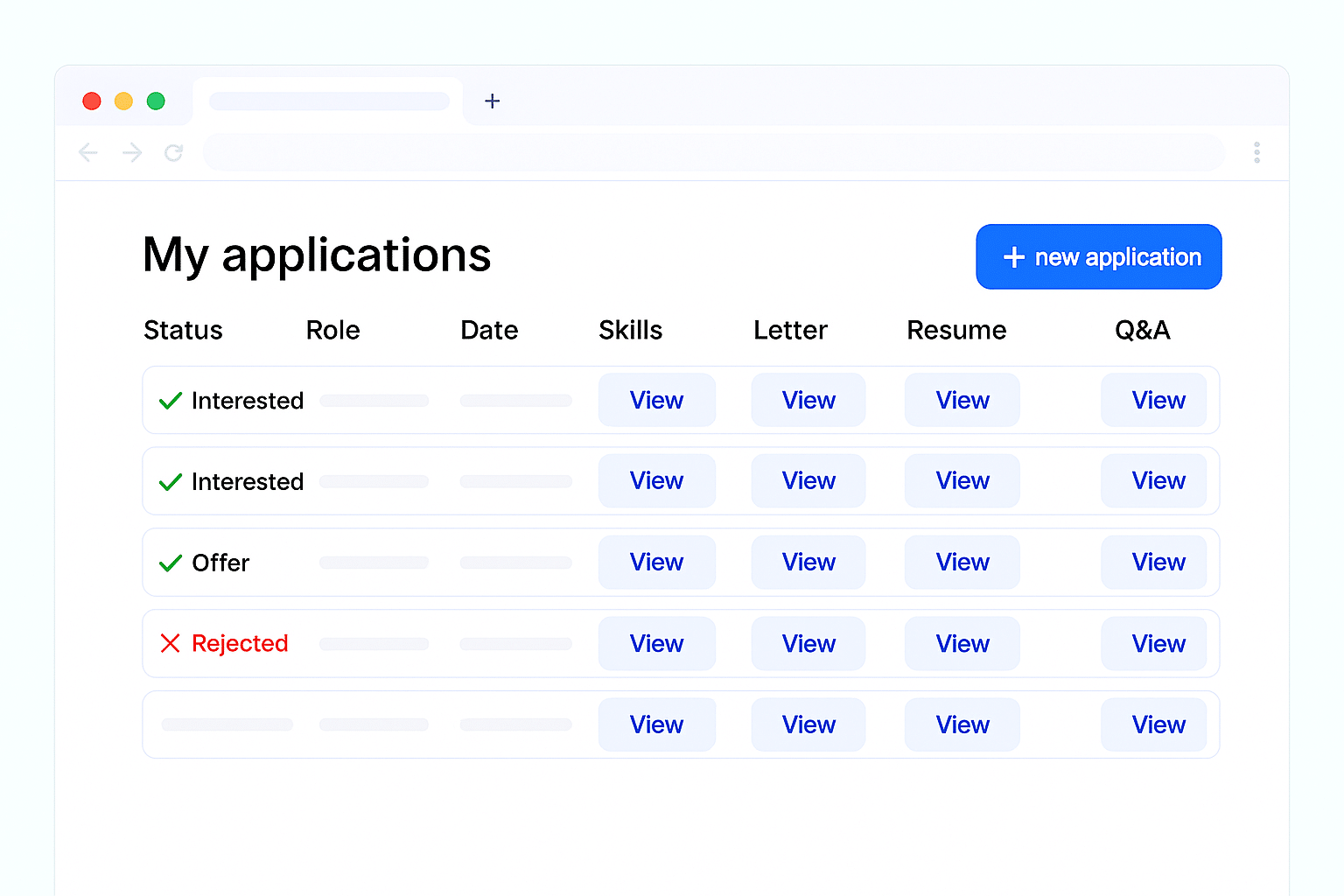
- Organize Your Applications: Use a simple spreadsheet or a Trello board to keep track of where you've applied, the date, the specific resume version you sent, and any follow-up actions.
- Network and Explore Opportunities: Don't just rely on job boards. As you get ready to send out your resume, you can also look into current hiring trends. For example, many students find success by looking for companies hiring part-time workers, especially during peak seasons.
By following the strategies in this guide, you’ve learned how to craft a compelling story that proves your value, even without a long work history. Each of the student resume examples for a first job we've broken down shows that it’s not about having the most experience; it’s about presenting the experience you faire have in the most impactful way possible. Your resume is your first professional handshake—so make it a confident and memorable one.
Ready to stop guessing and start getting interviews? The strategies here give you the blueprint, but JobWinner gives you the power tool. Instead of spending hours manually customizing your resume for every application, use the AI-powered JobWinner platform to instantly analyze job descriptions and tailor your resume to match, ensuring you stand out to both ATS and hiring managers. Apply smarter and turn your new resume into your first career win.