 IT
IT  EN
EN  ES
ES  FR
FR 
Feeling like your resume is disappearing into a black hole? You're not alone. In today's market, job application assistance isn't a shortcut; it’s the strategic toolkit you need to finally get noticed. It's about applying smarter, not just harder, to get the attention you deserve.
Why Job Application Assistance Is Now Essential
The modern job hunt can feel like trying to be heard in a massive, noisy stadium. You’re shouting your qualifications, but your voice gets completely lost in the crowd. This feeling isn't just in your head—it’s the reality of a job market overloaded with applications and dominated by automated screeners.
This is precisely where job application assistance comes into play. It’s not about cheating the system, but about understanding its new rules. These tools and strategies are designed to help you navigate a hiring process that has become a brutal numbers game.
The Modern Job Hunt by the Numbers
Let's be honest: the modern job search is a marathon of volume and rejection. In the fiercely competitive market of 2026, it's not uncommon for job seekers to submit a staggering 400-750+ applications just to land a single offer. This explosion is fueled by one-click 'easy apply' features that flood employers with resumes, dropping your odds of getting noticed from any single application to as low as 0.1%. You can dig deeper into these challenging statistics by exploring the full data on the job search numbers game on LifeShack.com.
A Quick Tip: The harsh truth is that for every 1,000 people who even look at a job post, only about 25 resumes make it past the automated filters to a human hiring manager. From there, maybe four to six candidates will actually land an interview.
The journey from application to offer is a steep funnel, and the data paints a clear picture.

This visual powerfully shows how hundreds of applications are systematically whittled down to just one successful offer.
Escaping the Application Black Hole
Without a smart approach, it’s easy to get stuck in a frustrating cycle of application fatigue and recruiter ghosting. The first hurdle is getting past the automated gatekeepers—the Applicant Tracking Systems (ATS)—that filter out most candidates before a person ever sees their name. To beat the bots and get in front of a real human, you need a solid strategy.
This means focusing on a few key things:
- Ottimizzazione delle parole chiave: Making sure your resume speaks the exact same language as the job description.
- Targeted Customization: Tailoring every single application to the specific role you're applying for. No more spray-and-pray.
- Flawless Formatting: Creating documents that are clean and easy for both software and humans to read.
Adopting this strategic mindset is the first step toward taking back control of your job search and turning all that effort into actual interviews.
Decoding the Digital Gatekeepers of Hiring
Have you ever sent out dozens of job applications, only to be met with complete silence? It’s a frustratingly common experience, and the reason often isn't your qualifications. The likely culprit is a piece of software known as an Sistema di tracciamento dei candidati (ATS).
Imagine a strict digital bouncer guarding the entrance to your dream job. This bouncer has a very specific checklist, and if you don’t match it perfectly, you’re not getting in. That’s an ATS in a nutshell.

These systems weren’t designed to be difficult on purpose. They’re simply a tool companies use to manage the overwhelming number of applications they receive for any given role. The problem is, they rely on algorithms and keyword matching, which means fantastic candidates often get rejected because of small, easily fixable formatting errors or a lack of specific terms.
How ATS Software Screens Your Resume
At its core, an ATS scans your resume, looking for keywords and phrases that match the job description. If it can't read your resume because of weird formatting, or if it doesn't find enough matching words, your application gets tossed aside. It never even makes it to a real person.
Real Talk: This digital filter is incredibly harsh. It's estimated that ATS software rejects up to 98% of resumes before a hiring manager ever sees them. Out of 600 applications submitted, only about 25 might actually land on a manager's desk.
This is exactly why customizing your resume for each job is no longer just a good idea—it's essential. Using targeted job application assistance isn’t about cheating the system. It’s about understanding the rules of the game so your skills and experience can finally get the attention they deserve. For a deeper dive, check out our guide on how to pass ATS filters using AI.
ATS-Friendly vs ATS-Unfriendly Resume Habits
To make sure your resume sails past the bots and into human hands, you need to know what they look for—and what they can't stand. The way you structure and write your resume can be the difference between getting an interview and getting ignored.
Here’s a quick breakdown of what to do and what to avoid:
| ATS-Friendly Habit (What to Do) 👍 | ATS-Unfriendly Habit (What to Avoid) 👎 |
|---|---|
| Use standard, simple fonts like Arial or Times New Roman. | Using overly stylistic or script fonts that are hard to parse. |
| Use traditional section titles like "Work Experience." | Creative but confusing titles like "My Professional Journey." |
| Apply with a .docx or .pdf file format. | Putting your resume in the body of an email or using image files. |
| Use relevant keywords from the job description. | Submitting a generic, one-size-fits-all resume for every job. |
The numbers don't lie: the success rate for online applications can be as low as 0.1%–2%. By using smart tools and a tailored strategy, you can dramatically improve your odds and join the 4-6% of applicants who land an interview. To discover more about the recruitment funnel and its statistics, check out SmartRecruiters.com. Getting past the ATS is the first and most important hurdle in your job search.
Choosing Your Job Search Ally: Manual vs. AI
When you decide you need a hand with your job search, you'll find yourself at a fork in the road. One path is the traditional route, with human experts like career coaches and professional resume writers. The other is a more modern avenue paved with AI-powered platforms. Both can provide valuable job application assistance, but how they get you there couldn't be more different.
Think of the manual approach as a bespoke, high-touch experience. A great career coach becomes your personal guide, offering deeply personalized advice based on one-on-one conversations. This kind of dedicated attention is fantastic, but it often comes with a hefty price tag and a slower turnaround, which isn't ideal when you spot a new opening and need to act fast.
AI platforms, on the other hand, offer a completely different set of advantages: incredible speed and powerful, data-driven insights. An AI tool can help you craft dozens of custom-fit applications in the same amount of time it might take a human service to polish just one. This ability to scale your efforts is a massive advantage when you’re trying to apply to a wide range of roles.
A Head-to-Head Comparison
To figure out which approach is right for you, it’s helpful to see them side-by-side. Here’s a head-to-head comparison of traditional career services and modern AI platforms to help you choose the right support for your job search.
Manual vs AI Job Application Assistance
| Caratteristica | Manual Assistance (e.g., Career Coach) | AI Assistance (e.g., JobWinner) |
|---|---|---|
| Cost | High (often hundreds or thousands of dollars per package) | Low (typically a small monthly subscription) |
| Speed | Slow (days or weeks for a single resume revision) | Instantaneous (creates tailored documents in seconds) |
| Scalability | Low (difficult to customize for hundreds of applications) | High (easily generates unlimited custom applications) |
| Personalizzazione | Deep (based on interviews and personal interaction) | Data-Driven (based on job description keywords) |
| Availability | Limited (business hours, appointment-based) | 24/7 (available on-demand whenever you need it) |
As you can see, the choice isn't just about good versus bad; it's about what fits your immediate needs, budget, and timeline.
Which Path Is Right for You?
So, how do you choose your ally? It really comes down to your primary goal. If you're looking for deep, soul-searching career guidance and have the budget and time for a thorough process, a human coach is an outstanding investment. They can help with things AI can't, like networking strategies, interview presence, and long-term career mapping.
Here's the bottom line: For the core task of getting your application past the digital gatekeepers and into the hands of a real person—efficiently and at scale—AI is the clear winner. It's built specifically for the high-volume, fast-paced reality of today's job market.
Ultimately, the smartest strategy might not be an either/or choice. You could blend the two, using a coach for big-picture strategy while leaning on an AI platform like Vincitore di lavoro for the day-to-day grind of tailoring resumes and cover letters. This way, you get the best of both worlds: timeless human wisdom guiding powerful AI execution.
How AI Tools Actually Help You Get Hired
Enough with the theory. Let's get practical and see what happens when you put a dedicated AI tool to work on your job applications. This is where the whole process flips from a soul-crushing chore into a real strategic advantage. We’re not just talking about applying for jobs; we’re talking about winning loro.
Think about it this way: say you're a marketing manager trying to pivot into project management. Your resume is packed with marketing-speak. An AI tool can instantly translate your experience, turning "managed multi-channel campaigns" into "coordinated cross-functional teams to deliver projects on time and under budget." Suddenly, you’re speaking the language of the job you Volere, not the one you had.

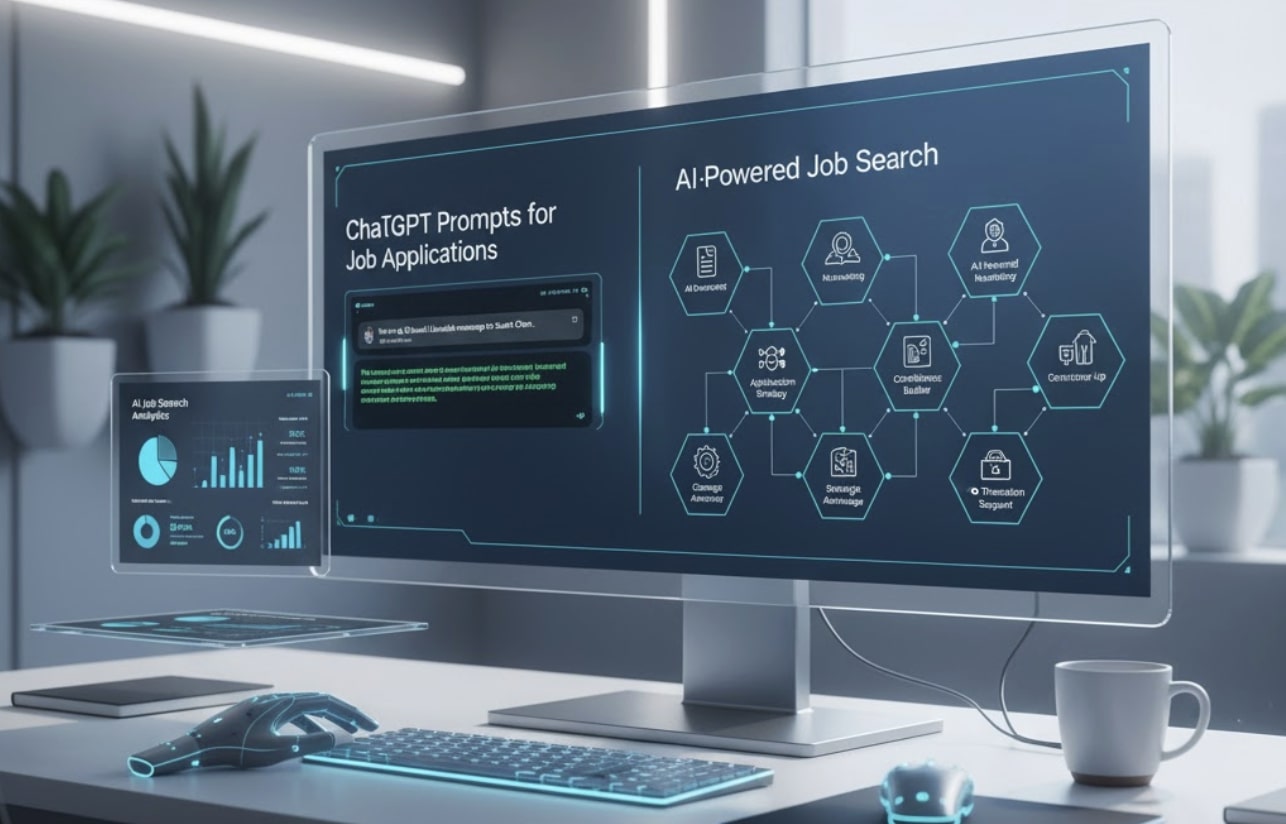
The image above really captures it. AI acts as an intelligent coach, sitting right on top of your application documents and making sure every single word is optimized to get you noticed. This isn't just about being faster; it’s about being smarter and far more precise.
Your Secret Weapon for a Strategic Job Hunt
Modern AI tools are so much more than simple document writers. They're a complete toolkit designed to give you a serious competitive edge, handling the most tedious and frustrating parts of looking for a job.
Here’s a breakdown of how they solve some all-too-common problems:
- Instantly Tailored Resumes: Forget spending hours manually tweaking your resume for every single opening. An AI tool scans the job description for the most important keywords and skills, then rebuilds your resume to match—all in a matter of seconds. If you want to see how this works, check out the i migliori strumenti di intelligenza artificiale per personalizzare il curriculum and see how much time you could save.
- Compelling Cover Letters: A great cover letter tells a story that makes a hiring manager sit up and take notice. AI can help you craft that story, weaving your most relevant accomplishments into a narrative that directly addresses the company’s needs. It's how you create a personal connection, even when applying at scale.
- Smart Job Match Analysis: This feature is like having a personal career advisor on call 24/7. It analyzes a job post against your resume and spits out a match score, showing you exactly how well you fit the role and, more importantly, where the gaps are.
How This Works in the Real World
Let's see how this plays out for a few different job seekers.
| Scenario | The Challenge | How AI Provides Job Application Assistance |
|---|---|---|
| The Recent Graduate | Strong academic background but feels their lack of professional experience is a weakness. | The AI digs into their resume to highlight relevant coursework, internships, and even class projects, reframing them with keywords that match entry-level job descriptions. |
| The Career Changer | Struggles to show how their skills from one industry apply to a completely new one. | The tool acts as a translator, rephrasing past achievements into the language of the new role and spotlighting transferable skills. |
| The Busy Professional | Juggles a full-time job and family, with very little time to dedicate to a job search. | The platform automates the customization grind, letting them apply for multiple high-quality roles quickly without ever sacrificing quality. |
Consiglio da professionista: By automating the repetitive tasks, AI tools free you up to focus on what actually matters: preparing for interviews and building connections. To get the most out of it, it's worth learning how to use AI for writing so your unique voice and personality still come through loud and clear.
This approach gives your job search a system. What was once a chaotic and stressful mess becomes a manageable, strategic operation. You're no longer just firing off applications into the dark; you're making calculated moves designed to get you in the door.
Staying Organized and Motivated on Your Search

Let's be honest: a modern job hunt is a marathon, not a sprint. The biggest risk you face isn't just rejection—it's burnout. When you're juggling dozens of applications, follow-up emails, and interview stages, things can get chaotic fast. This is where smart job application assistance stops being a "nice-to-have" and becomes absolutely essential for your sanity.
The numbers really drive this point home. The 2026 job search has turned into a serious endurance test. The median time-to-offer swelled from 57 days in the first quarter to a staggering 83 days by the end of the year. Companies are adding more interview rounds and being extra cautious, meaning job seekers are now applying for anywhere from 32 to over 200 roles before getting an offer. Staying organized isn’t just helpful; it’s your key to survival. If you want to dig deeper, you can read the full job search trends report.
Your Central Command Center
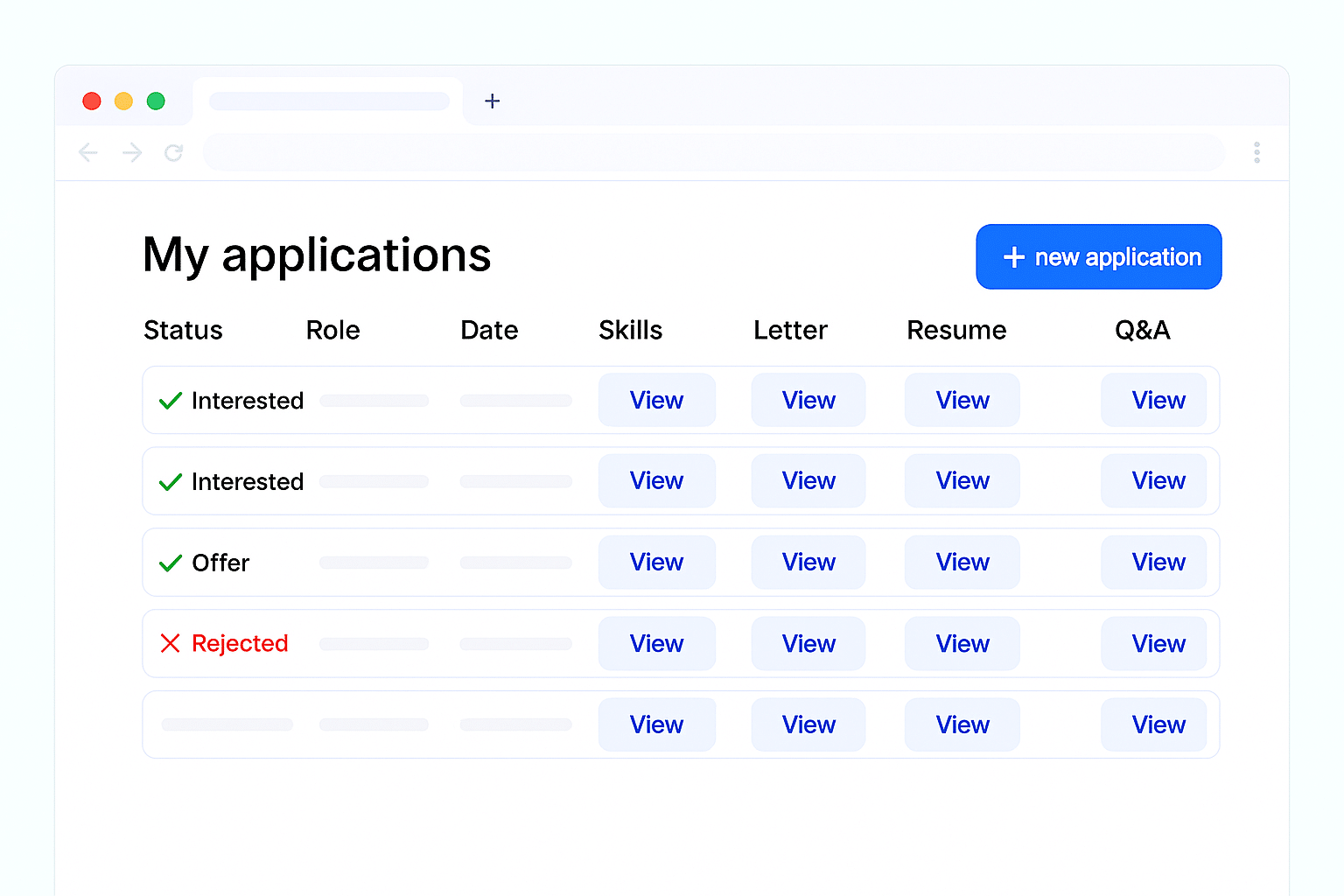
Think of a good Application Tracker as your personal command center for the entire job search. It’s so much more than a simple spreadsheet. It’s a dedicated system designed to stop opportunities from slipping through the cracks and to reduce the mental load of keeping everything straight.
Instead of constantly asking yourself, "Did I already apply there?" or "When was I supposed to follow up?", a tracker gives you instant clarity.
Mental Health Tip: An organized system isn't just about being tidy; it's about reclaiming your mental energy. When you don't have to hold every detail in your head, you can focus on what really matters: preparing for interviews and presenting your best self.
A solid tracker helps you manage all the moving parts:
- Who you applied to: Company names and direct links to the job descriptions.
- When you applied: Application dates, so you can see how long you've been waiting.
- What stage you're in: A clear pipeline from "Applied" to "Interviewing" to "Offer."
- Key contacts: Names and titles of recruiters or hiring managers.
- Follow-up dates: Gentle reminders to check in without feeling like a pest.
Your Personal Training Gym
The long, quiet wait for a response can feel like a dead zone, but it's actually a golden opportunity. This is where an Preparazione al colloquio tool becomes your personal training gym, helping you turn that anxious waiting period into productive, confidence-building time.
Turning Downtime into Prep Time
Instead of compulsively refreshing your inbox, you can start getting ready for the calls you Volere to receive. Trust me, it’s a much better use of your time and emotional energy.
Here’s how you can actively prepare while you wait:
| Preparation Activity | What It Looks Like (An Example) |
|---|---|
| Simulate Questions | Use an AI tool to generate likely interview questions based on the job description and start practicing your answers out loud. |
| Refine Your Stories | Polish your "Tell me about a time when…" examples. Make them sharp, concise, and impactful. For instance, turn a long story into the "STAR" method (Situation, Task, Action, Result). |
| Research the Company | Dig deeper than the homepage. Get to know their recent wins, their position in the market, and what their culture is really like by checking their recent press releases or LinkedIn posts. |
By making organization and preparation core parts of your strategy, you keep your momentum going. You shift the job search from a passive waiting game into an active, controlled process—keeping you sane and ready to go until you finally land that offer.
Your Action Plan for a Smarter Job Search
Feeling ready to take charge? Great. Now, let's translate that energy into a practical, step-by-step roadmap that will help you land a job faster. Think of this as your personal checklist for success, giving you the job application assistance you need to navigate today's competitive market.
We're going to break down the essential steps to put you back in the driver's seat.
Your Winning Checklist
This isn't about working harder; it's about working smarter. The goal is to adopt a strategic mindset, let AI handle the tedious tasks, and stay organized throughout the process. Follow these steps, and you'll start building momentum and seeing tangible results.
- Embrace a Strategic Mindset: Ditch the "spray and pray" method for good. From now on, every application you send will be a deliberate, targeted move.
- Automate Repetitive Work: Let AI do the heavy lifting. Use it to tailor your resumes and cover letters for each role, saving you countless hours and helping you get past automated screening bots.
- Prioritize High-Fit Roles: Before you even think about applying, analyze how well the job description matches your skills. Pour your energy into the opportunities where you genuinely have the best shot at success.
- Track Every Application: You need a system. Keep a simple, clean record of every application, follow-up email, and interview. This prevents things from getting chaotic and ensures you never let an opportunity slip through the cracks.
Esempio in azione: A well-structured plan transforms a stressful job hunt into a manageable project. It's about taking control, one organized step at a time, to achieve your career goals. For instance, dedicate Mondays to finding 10 high-fit roles, Tuesdays to tailoring and applying, and Wednesdays to networking and follow-ups.
To really give yourself an edge, you have to know how to create application documents that grab attention. This is true for everyone, even if you're a fresh graduate wondering how to write a CV with no experience—a solid plan is what makes the difference. For more insights on how to structure your search, take a look at our guide for creating a 30-day job search plan.
Domande frequenti
It’s completely normal to have questions when you’re navigating the job hunt, especially with new tools in the mix. Let's tackle some of the most common ones so you can feel confident in your approach.
Will Using AI for My Resume Get Me Flagged as Cheating?
Not at all. Think of it less like cheating and more like using a powerful tool to make your work shine. It's similar to running your writing through a grammar checker or using a calculator for a tough math problem.
AI assistants don't invent your experience; you provide all the information about your skills and career history. The tool simply helps organize and word that information so it gets past the automated systems—the Sistemi di tracciamento dei candidati (ATS)—that most companies use. It’s about ensuring a human being actually sees your qualifications, rather than having your application tossed aside by a machine.
How Is AI-Generated Content Different from a Resume Template?
That's a great question, and it's a point of confusion for many people. The difference is pretty huge.
A standard template is just a static document. You get a pre-set layout and have to manually plug in your information, hoping it fits. It’s a one-size-fits-all approach that rarely works because it isn't customized for the specific job you want.
An AI platform, on the other hand, is dynamic. It actively builds a new, unique document for each application.
| Caratteristica | Standard Resume Template | AI-Powered Platform |
|---|---|---|
| Customization | Static and one-size-fits-all; you manually fill in the blanks. | Dynamic; creates unique documents for each specific job. |
| Keyword Use | Generic; does not adapt to the job description's language. | Intelligent; analyzes the job post and weaves in relevant keywords. |
| Effectiveness | Low; often fails to pass ATS because it is not targeted. | High; designed to speak directly to what that employer wants. |
So, while a template is a passive form, an AI platform is an active partner that tailors your application every single time. This custom-built approach is what dramatically increases your chances of getting noticed.
Is Job Application Assistance Only for Tech Jobs?
Absolutely not. This is a common misconception. The reality is that almost every industry now relies on software to manage hiring.
From healthcare and finance to manufacturing and retail, the vast majority of companies use Applicant Tracking Systems. Whether you're aiming for a role at a Fortune 500 giant or a local small business, your application will almost certainly be screened by a machine before a person ever sees it. So, these tools are valuable for just about everyone.
Ready to stop applying into the void and start getting interviews? Vincitore di lavoro provides the AI-powered job application assistance you need to get past the bots and in front of hiring managers. Start winning your job search today at JobWinner.ai.